Connection in Bachata: What It Is, Common Problems and Drills to Fix Them
Part of: Leading and Following in Bachata: The Complete Guide
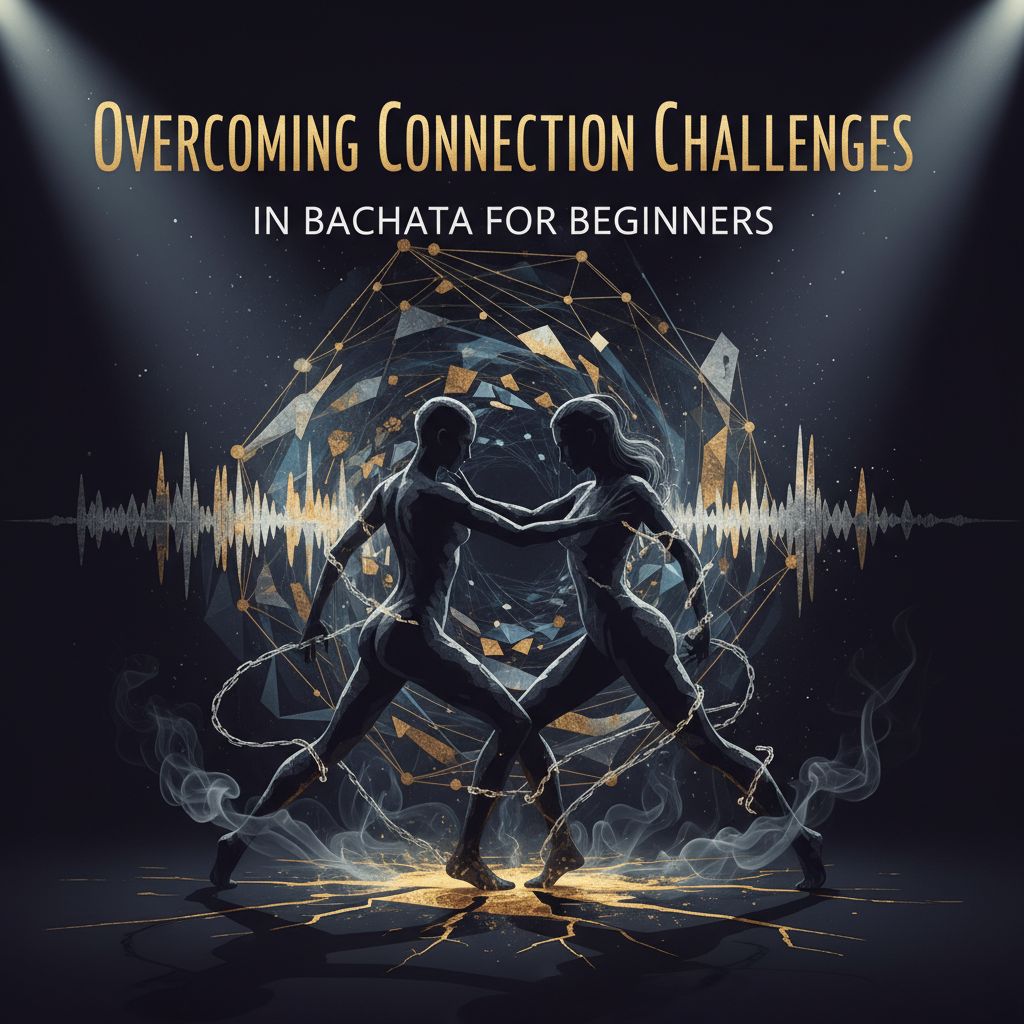
Connection in bachata is the physical conversation between partners: a light, steady tone in the frame that carries the lead’s body movement to the follower and the follower’s response back to the lead. It works through gentle tension and compression, shared timing and attentive listening. It has nothing to do with grip strength or romance.
Beginners often hear that a dance “had great connection” without anyone explaining what that means in the body. This article breaks it down into parts you can practise. For how connection fits with preparations, signals and roles, see our complete guide to leading and following in bachata.
What does connection mean in bachata?
To newcomers, “connection” can sound romantic or personal. On the dance floor it means two people, even complete strangers, moving as one unit and responding to each other in real time. Dancers usually talk about three layers:
| Layer | What it is | What it looks like |
|---|---|---|
| Physical | Communication through the hands, arms and torso: pressure, tension, release, weight changes | The follower moves at the same moment as the lead, without being pulled |
| Musical | Both partners hearing and interpreting the same music | Hitting a break together, softening in a quiet section |
| Expressive | Showing the mood of the song through movement, face and energy | Both dancers visibly enjoying the same moment |
The physical layer comes first, because the other two depend on it. Without a clear physical connection, the follower cannot feel when the lead wants to slow down for a break.
How do frame, tension and compression work?
Frame is the shape both dancers hold so that movement in one body reaches the other. Many beginners think the frame is in the arms, but its strength comes from the upper back and torso. The arms stay in front of the body, elbows slightly bent, connected to the shoulder blades rather than floating on their own. When the lead’s torso moves, the arms move with it, and the follower feels the change.
Within that frame, partners communicate through two forces, as described in the Wikipedia article on connection in partner dance:
- Tension (also called leverage): both dancers lean very slightly away from each other with equal force, like a gentle stretch through the arms.
- Compression: both dancers press very slightly towards each other through the hands or frame.
These are small forces. A useful image is holding something fragile: firm enough to be safe and clear, soft enough to be comfortable. A frame with no tone at all (often called “noodle arms”) cannot transmit a signal. A rigid frame transmits everything, including noise, and quickly becomes tiring and uncomfortable.
Clarity depends more on timing and body movement than on force. Leads who move from the torso and keep extra arm movement to a minimum send a cleaner signal: less noise, so the actual lead stands out. Experienced followers usually need less pressure than beginners, so leads should adjust the amount for every partner.
What does good connection feel like in each position?
| Position | Good connection | Common mistake |
|---|---|---|
| Open hold (hands) | Palm-to-palm or fingers hooked lightly; the follower gives a little weight into the lead’s hands so movement is felt instantly | Gripping, pressing with the thumb, or a follower so light that the lead has nothing to feel |
| Closed hold | The lead’s hand sits on the follower’s upper back at a comfortable height; the follower’s arm rests with some weight on the lead’s arm or shoulder | Hand too high or too low, squeezing, or the follower’s arm hovering with no weight |
| Close embrace | Contact through the torso, with movement coming from the core so both bodies shift together | Pulling the follower in with the arms instead of moving together |
Followers often describe a good lead’s hand as secure: steady contact without squeezing. Leads value the same in followers who give a little weight instead of hovering. Both partners are responsible for the connection: the follower’s tone matters just as much as the lead’s. The guide to following in bachata covers the follower’s side in detail.
What are the most common connection problems?
- Noodle arms. The arms have no tone, so signals get lost. Fix: engage the upper back and keep the elbows in front of the body.
- Death grip. Squeezing the hand or pressing with the thumb makes the follower feel pinned and stops them rotating freely. Fix: hook or rest the fingers rather than gripping.
- Leading with the arms. The follower feels yanked and the signal arrives late. Fix: move the torso and let the arms follow.
- Anticipating. The follower guesses the next move and goes before the lead. Tension and compression on their own are not a signal to move. Wait for the actual movement.
- Not adjusting to the partner. The same force feels gentle to one person and harsh to another. Fix: start soft and add tone only if the signal is not getting through.
- Ignoring the response. A lead who never notices how the follower reacts is talking, not having a conversation. Leave space, notice styling, and respond to it.
Why do dancers lose their groove when dancing with a partner?
Many dancers have a relaxed, grounded basic when practising alone, then lose it as soon as they dance with someone. The cause is divided attention: they are tracking their own steps, the timing, their partner’s movement and the next pattern all at once, and the basic suffers first.
The fix is to make the basic automatic, so it doesn’t need conscious attention. Practise it until it is as natural as walking: knees soft, weight going down into the floor, three steps and a tap or hip accent on 4 and 8. Once the footwork runs on its own, attention is free for the partner, and the grounded feel stays when the hold starts.
What if close connection feels uncomfortable?
Bachata’s close embrace and eye contact can feel like a lot, especially for people from cultures where physical touch between strangers is less common. That is normal, and connection does not require closeness. Good dancers adapt how close they dance to each partner’s comfort: start in open or a more open closed hold, keep the embrace light, and only move closer when the partner clearly welcomes it. A friendly greeting and a relaxed smile do more to make someone comfortable than any technique. Our article on eye contact and facial expression in bachata covers how much eye contact feels natural.
Which drills build better connection?
Practise these with a partner for a few minutes at a time:
- Walking in open hold. The lead walks forward and back with a slight stretch or press in the arms, with no footwork pattern. The follower matches speed and direction without anticipating. Then swap roles.
- Body-only lead. The lead keeps the arms in a fixed frame and leads the basic, side changes and stops using only the torso. If the follower cannot feel it, the frame is too loose.
- Eyes-closed basic. The follower closes their eyes while the lead changes between forward-back, side-to-side and pauses. This trains both dancers to rely on feel rather than sight.
- Mirroring. Partners face each other without touching, and one copies the other’s movement as closely as possible. This builds attention to small changes.
- Rotate partners. Dancing with many different people teaches you to adjust your tone, which is the most important connection skill at socials.
Some dancers also take a slow breath together before the music starts, which helps both people settle and relax their shoulders.
Can you have good connection with a stranger?
Yes. Physical connection is a technical skill, not chemistry. Two dancers with good frame, timing and attention can have a well-connected dance within the first few bars, and dances that start clumsily often settle once both partners adjust.
How long does it take to develop good connection?
There is no set timeline, but most dancers notice a clear improvement once their basic is automatic and they have danced with a wide range of partners. Regular practice with feedback speeds it up far more than learning new moves.