Eye Contact and Facial Expression in Bachata and Salsa: How Much Is Right?
Part of: Leading and Following in Bachata: The Complete Guide
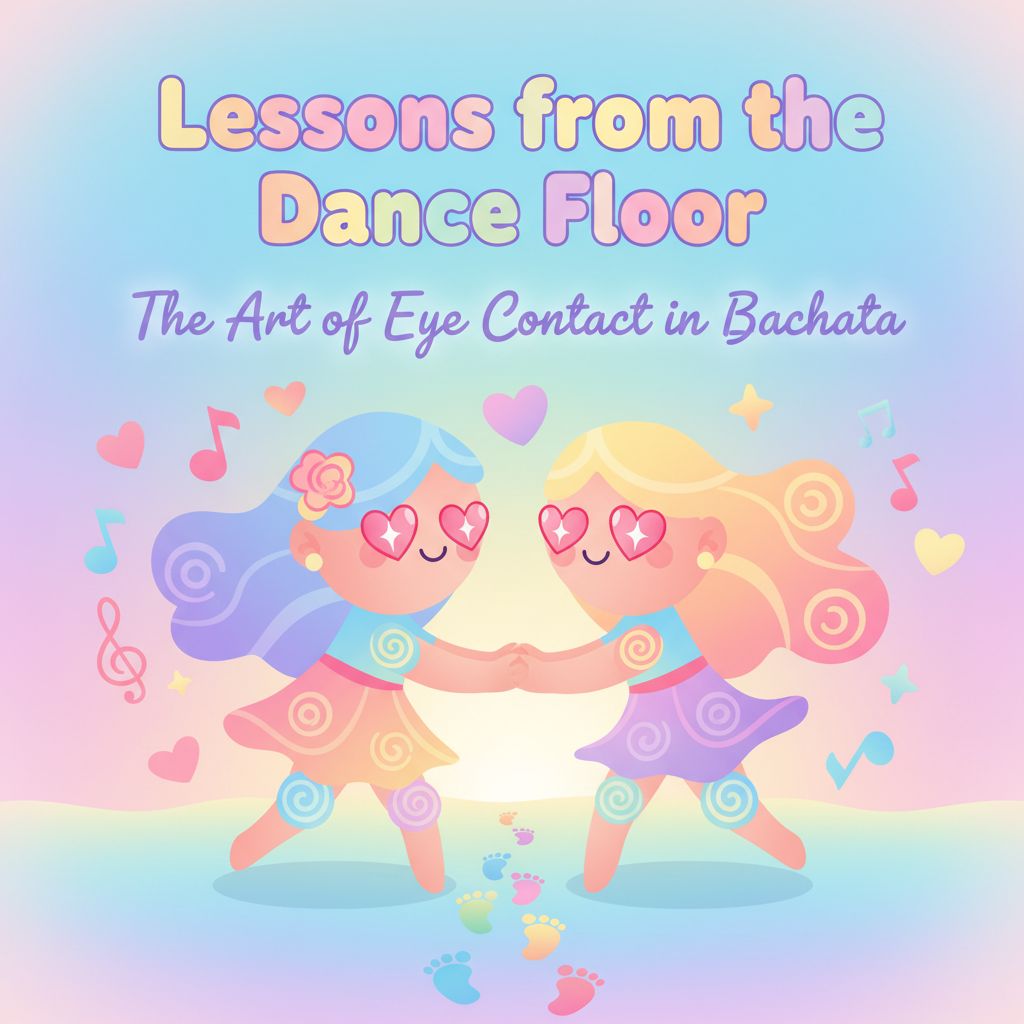
In bachata and salsa, good eye contact is intermittent: relaxed glances when the dance starts and ends, on breaks in the music and in open position, with a soft, unfocused gaze the rest of the time. Constant staring feels intense, while never looking at your partner can feel distant. Adjust to your partner’s comfort.
Eye contact is one part of the connection between partners, along with frame, timing and musicality. For the physical side, see our complete guide to leading and following in bachata.
Why does eye contact matter in partner dancing?
Social dancing is a social activity. A glance and a smile show your partner that you are present, paying attention and enjoying the dance with them, not just running through patterns. Dancers in community discussions often say that a technically clean dance with no eye contact at all felt impersonal, while a simple dance with a few shared looks felt warm.
Eye contact also helps with shared musical moments. When the music breaks or a vocal accent hits, a quick look lets both dancers enjoy the moment together. It does not replace the physical lead, though: moves are led through the frame and the body, not with the eyes.
How much eye contact is right?
There is no fixed rule, but these patterns are common in bachata and salsa:
| Moment | Typical eye contact |
|---|---|
| Greeting and the first bars | A friendly look and a smile to start the dance |
| Bachata close embrace | Little or none; heads are side by side, eyes looking past the partner’s shoulder |
| Open hold, basic steps | Occasional relaxed glances, mixed with looking around the floor |
| Breaks and accents in the music | A short shared look or smile |
| Turns | Followers spot a fixed point, often the lead, to stay balanced and oriented |
| End of the dance | Eye contact with a thank-you |
Salsa is danced mostly in open position, facing each other, so eye contact tends to come more naturally than in bachata, where much of the dance happens in closed or close hold. In sensual bachata, body waves and head movement leave even less room for direct eye contact.
- Too much: holding an unbroken gaze for long stretches can feel intrusive or flirtatious, especially with someone you have just met.
- Too little: looking at the floor, your feet or around the room for the whole song can come across as disinterest, even when you are just concentrating.
The best guide is your partner. If they hold eye contact easily, you can return it more. If they look away often, give them space. Comfort with eye contact varies between people and cultures, and neither preference is wrong.
Where should you look when not making eye contact?
- Soft focus past your partner. In closed hold, look over or past their shoulder with a relaxed gaze.
- Around the floor (leads especially). Leads are responsible for floorcraft. Scanning the space keeps the couple from colliding with others, and it is the main reason good leads look away regularly.
- Not at your feet. Looking down pulls the head and chest forward, breaks posture and makes you harder to lead or follow. Glance down only when you really need to.
- Not at your phone or at other couples for long. Followers notice when a lead’s attention drifts.
What if eye contact makes you uncomfortable?
Many dancers, especially shy ones and beginners, find eye contact the hardest part of partner dancing. Some report being told bluntly by a partner that avoiding eye contact made the dance feel cold. That kind of feedback can sting, but the point behind it is usually about presence, not about staring.
Eye contact can be practised like any other skill:
- Start with the easy moments: the greeting, the end of the dance and big breaks in the music.
- Add a short glance every time you return to a basic in open hold.
- If direct eye contact feels too intense, many people find it easier to look at the area between the eyebrows, which still reads as eye contact.
- Practise with friends at a practice session, where it feels less loaded.
Comfort usually improves as the footwork becomes automatic. Once you no longer need to think about every step, attention moves naturally from your feet to your partner.
What does a partner’s serious face really mean?
Some dancers have a neutral or serious expression when their face is relaxed, often jokingly called a “resting face”. On the dance floor it is easy to read that as boredom or annoyance, but usually it is something else:
- Concentration. Many dancers look serious while working out a pattern, staying on time or following an unfamiliar lead. This is especially common in beginners and in followers dancing with a new partner.
- Cultural and personal habits. In some cultures and for some people, smiling is not the default way to show enjoyment.
- Comfort with the partner. Someone who has just met you may simply be reserved.
The better signal is the physical connection between partners. A follower who responds smoothly, matches your energy and styles on the music is engaged, whatever their face is doing. A lead who listens, adapts and leaves space is engaged too.
How to respond:
- Don’t take it personally, and don’t ask a partner to smile.
- Smile yourself. A relaxed expression and a light moment, like playing with a break, often relaxes the other person.
- End warmly. A sincere thank-you closes the dance on a friendly note, whatever happened in the middle.
How can you tell what your own face is doing?
Most dancers don’t know. Filming a dance at a practice session or social (with your partner’s permission) quickly shows whether your concentration face looks like a frown. Common fixes: relax the jaw, breathe out on difficult moves and smile on the easy parts of the dance, like the basic. Dancing patterns you already know well also frees up attention to enjoy the dance, which shows on your face.
Is eye contact in bachata flirting?
Generally no. Friendly eye contact is a normal part of social dancing and is not an invitation. Long, intense gazes can be read as flirting, so keep eye contact relaxed and brief with people you don’t know well.
Should followers look at the lead during turns?
Many followers spot the lead, or a fixed point near them, to stay balanced and finish turns facing the right way. Spotting means finding the point quickly as the head comes round, not staring at it for the whole turn.