Bachata for Beginners: The Complete Guide to Learning Bachata
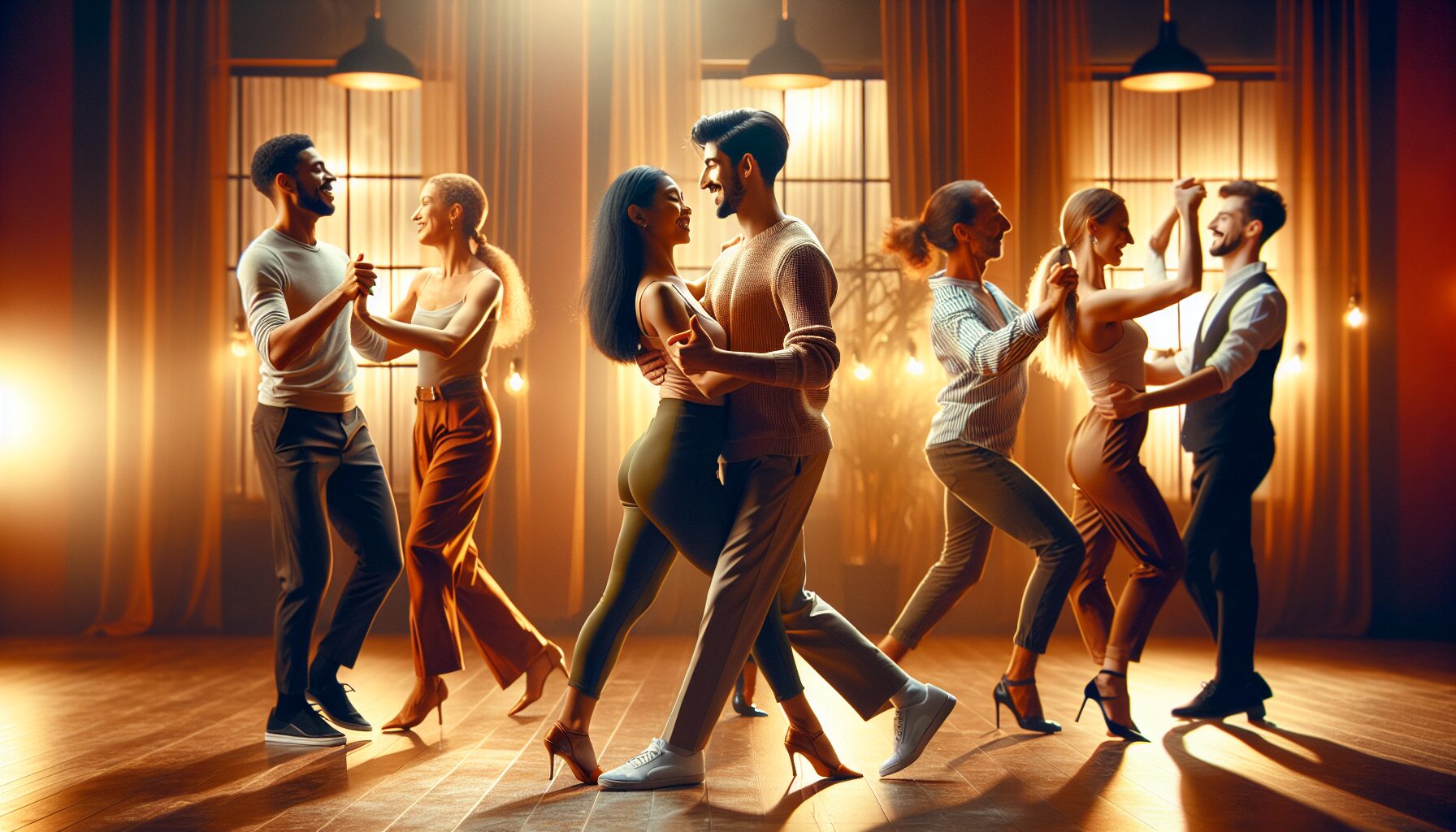
Bachata is one of the easiest partner dances to start. The basic step is three steps and a tap, repeated side to side over eight counts. Most beginners pick it up in their first class. With regular group classes, some practice at home and a few socials, most people feel comfortable on a social dance floor within a few months.
This guide covers everything a new dancer needs, in the order you will need it: what bachata is, the basic step and first moves, how long learning takes, how to choose between group classes, private lessons and online courses, your first social, whether to learn salsa first, and the mistakes that slow beginners down. Most of the advice applies to salsa as well. At the end you will find links to every detailed guide in this series.
What is bachata, and is it a good dance for beginners?
Bachata is a partner dance and a music genre from the Dominican Republic. In 2019 UNESCO added bachata music and dance of the Dominican Republic to its Representative List of the Intangible Cultural Heritage of Humanity. UNESCO describes the music as a fusion of rhythmic bolero with Afro-Antillean genres such as son, cha-cha-cha and merengue. It also notes that bachata is passed on informally at family and community celebrations, and through more than a hundred academies, studios and schools dedicated to teaching it.
Outside the Dominican Republic you will usually meet three families of style:
- Dominican bachata. The traditional style, with lively footwork and a box-shaped basic.
- Modern bachata. A side-to-side basic with turns and changes of hold. This is what most beginner classes teach first.
- Sensual bachata. A style built around body waves, isolations and close connection. According to the Wikipedia article on bachata dance, it was created in Cádiz, Spain.
For a beginner, bachata has real advantages. The tempo is slower than salsa, the basic step fits in your first lesson, and most Latin socials play a lot of bachata, so you get plenty of chances to practise. The depth comes later, in body movement, musicality and connection. Many dancers say bachata is easy to start and hard to master, and that is a good combination for a hobby you want to keep.
How do you do the bachata basic step?
Bachata is counted in eights. You step on 1, 2 and 3, tap on 4, step on 5, 6 and 7, and tap on 8. In the side basic, the leader steps to the left, closes the right foot, steps left again and taps. Then the leader repeats the pattern to the right. The follower mirrors it, starting with the right foot.
| Count | Leader (side basic) | Follower (side basic) |
|---|---|---|
| 1 | Step left | Step right |
| 2 | Close right foot to left | Close left foot to right |
| 3 | Step left | Step right |
| 4 | Tap right foot (no weight) | Tap left foot (no weight) |
| 5 | Step right | Step left |
| 6 | Close left foot to right | Close right foot to left |
| 7 | Step right | Step left |
| 8 | Tap left foot (no weight) | Tap right foot (no weight) |
Three rules matter more than anything else. Put no weight on the tap. Keep your knees soft and your steps small. Let the hip motion come from bending your knees and transferring your weight, not from pushing your hips. Dance With Me’s beginner bachata guide describes the hip motion in exactly these terms, and warns that forced hip popping makes beginners look rigid.
Once the side basic is automatic, add the forward-back basic and the Dominican box step. They use the same timing in different directions. Our detailed guide to the bachata basic step has a full count table for all three patterns, and a list of the faults that make a basic look stiff.
What are the first moves to learn after the basic?
After the basic, beginner classes usually work through partner skills in roughly this order:
- Open position. Facing each other at arm’s length, holding one or both hands.
- Closed position. The leader’s right hand on the follower’s left shoulder blade, with a light, slightly firm frame.
- Leading and following the basic. Starting together and changing direction together.
- The follower’s right and left turns. Turns that start from open position and finish back in the basic.
- Simple combinations. Changing from closed to open position, adding a turn, and returning to the basic.
Three or four moves danced cleanly are enough for a social. Our step-by-step guide to dancing bachata walks through each stage, with what to practise and how to tell you are ready for the next.
How long does it take to learn bachata?
There is no single answer, because it depends on how often you dance, whether you go to socials, and any music or dance background you bring. Schools and dancers do report similar milestones, though.
| Stage | What it usually looks like | What you can do |
|---|---|---|
| First lesson | The basic step’s structure makes sense | Step, step, step, tap in time with slow music |
| First few weeks of classes | The basic becomes automatic | Dance the basic with a partner and try a turn or two |
| A couple of months of classes plus socials | Turns and changes of hold connect | Dance a whole song at a social with a few moves |
| Around six months | Comfort on the social floor | Dance with many partners and recover from mistakes |
| Beyond | Musicality, body movement and connection | Keep improving for years |
The Australian school QuickSteps gives a concrete example in its bachata lessons guide. It says a student taking one private lesson and two group classes a week could be confidently asking people to dance at a bachata club within six to eight weeks, and that for most people things start to feel good around the six-month mark. The same school adds that it depends on practice, past experience and natural ability.
Two things are worth knowing in advance. First, progress isn’t linear. Most dancers describe long flat stretches followed by sudden jumps, and an awkward phase some people call “beginner’s hell”. Second, leaders often take a little longer to feel comfortable at their first socials, because they have to choose moves and keep time for two. Our guide to how long it takes to feel comfortable with bachata covers the typical stages and what speeds them up.
Should you take group classes, private lessons or an online course?
Most dancers end up using all three, but at different times. Arthur Murray’s comparison of private lessons and group classes puts it plainly: both have distinct advantages, private lessons cost more per hour, and the most effective approach is to use both.
| Option | Best for | Strengths | Limits |
|---|---|---|---|
| Group classes | Almost every beginner | Structure, rotating partners, meeting the local scene, lower cost per hour | A fixed pace, little individual feedback |
| Private lessons | Specific problems, plateaus, nervous starters | Immediate personal feedback, your own pace, faster fixes | Cost more per hour; no rotation with other dancers |
| Online courses | Practice between classes, people far from a school | Flexible, repeatable, good for solo footwork | Nobody corrects you; no partner feedback |
| Socials | Applying what you learn | Real music, many partners, confidence | Not a lesson: nobody teaches you on the floor |
A practical path for most beginners:
- Start with a beginner group series at a local school. QuickSteps notes that group classes are the best way to meet people in the bachata community.
- Add socials early, even with only the basic and one turn.
- Book a private lesson when you are stuck on something specific, or before your first social if you are anxious.
- Use online lessons to review and drill, not as a replacement for dancing with real partners.
Do you need a partner? No. Most schools rotate partners in class, and QuickSteps says outright that you can come with a partner but certainly don’t need one. Many people take their first class alone.
How do you choose a school? Check which style it teaches (Dominican, modern or sensual), whether beginner classes run as a series or as drop-ins, and whether partners rotate. Teaching styles differ a lot between instructors. Many dancers find it useful to take classes with more than one teacher after the first few months, while sticking with the fundamentals in the meantime. A free or low-cost trial class is a good way to judge the atmosphere.
What does it cost? Prices vary a lot between cities and schools, so check locally. Many schools sell monthly passes or class cards that work out cheaper than paying per drop-in class. You don’t need special clothing to start: comfortable clothes and shoes that let you turn are enough.
For more detail, read our guides to whether private dance lessons are worth it and how to choose an online bachata course.
When should you go to your first bachata social?
Sooner than you think. There is no fixed rule, but many dancers go to their first social after a handful of classes, often to a social that starts with a beginner class. Socials are where the basic becomes automatic. It’s normal if your first one feels awkward.
A first-social checklist:
- Go with classmates, or arrive for the pre-social class so you already know a few faces.
- Start with people you know, then branch out.
- Tell partners you are new. Most experienced dancers remember their own first night.
- Stick to your basic and two or three moves you can do cleanly.
- Keep moves small on a crowded floor.
- Ask politely, accept a “no” without taking it personally, and know that you can say no too.
- Don’t teach or correct partners during a dance, and don’t ask for critique mid-song.
- Never dip or try tricks without asking first.
- Shower, wear deodorant and bring a spare shirt.
- Say thank you at the end of the song, and count the night as a success if you danced at all.
Most of these come straight from standard social etiquette. Yami Shoes’ guide to salsa and bachata social dancing etiquette, for example, says you are not obligated to accept an invitation, that a declined invitation is not personal, that partners shouldn’t be corrected unless they ask, and that leaders should always ask before a dip. Our full guide to your first bachata social covers what to expect, when to go and how to handle a night that doesn’t go well.
Should you learn salsa or bachata first?
For most people, start with the dance whose music you love, or whichever one your local scene plays most. Bachata is usually easier to start. Salsa front-loads more difficulty but rewards it.
| Salsa | Bachata | |
|---|---|---|
| Tempo | Fast | Slower |
| Count | Steps on 1-2-3 and 5-6-7, pause on 4 and 8 | Steps on 1-2-3 and 5-6-7, tap on 4 and 8 |
| Hold | More open position, many turn patterns | More closed position, closer connection |
| Early learning curve | Steeper | Gentler |
| Long-term depth | Turn patterns, shines, speed | Body movement, connection, musical nuance |
The sources differ on exact tempos. The Dance Dojo’s salsa vs bachata guide gives roughly 150 to 250 bpm for salsa and 120 to 160 bpm for bachata. Salsa Vida gives 160 to 220 bpm and 108 to 152 bpm. Both agree that bachata is easier to start, and both say neither dance is easy to master.
Learning both at once is common, because most Latin socials play both, and many beginner courses pair them. If two new dances feel like too much, start with one and add the other a few months later. It is also fine to skip one entirely. Our comparison of salsa vs bachata for beginners goes deeper, including tips for salsa dancers moving to bachata.
What are the most common bachata beginner mistakes?
- Putting weight on the tap. The next step then starts on the wrong foot.
- Big steps and exaggerated movement. Bigger doesn’t look better. It makes you late and lands on your partner’s feet.
- Collecting moves instead of improving technique. A clean basic and three good moves beat a dozen shaky ones.
- Looking at your feet. It breaks your posture and your connection. Use a mirror at home instead.
- Styling too early. Hip and arm styling on top of an unsteady basic costs you your timing.
- Forcing and guessing. Leaders who pull with their arms and followers who anticipate moves both make the dance harder.
- Skipping socials. Classes teach the moves. Socials teach you to dance.
- Always dancing with the same partner. Rotating teaches you to adapt to different bodies and styles.
- Comparing your progress with others. People start from different places and progress at different speeds.
- Not reviewing class material. If filming is allowed, record a short recap and watch it within a day or two.
Leaders have a few extra traps, such as leading with force and ignoring the space on the floor. They are covered in our list of common beginner leader mistakes.
How can you practise bachata at home?
You need a few square metres of floor, some music and ten to twenty minutes. Short sessions several times a week work better than one long session, and you don’t need a partner for most of it.
- Listen actively. Play bachata while you cook or commute, and tap the 4 and 8.
- Walk to the music. Walk around the room on the beat, then walk “step, step, step, pause”, changing direction.
- Drill the three basics in sequence: side, forward-back and box.
- Rehearse turn footwork alone, with three small steps for a full turn, finishing on balance.
- Use a mirror and your phone. A short video shows bouncing, big steps and a dropped head that you can’t feel.
- Write down what you learned. A note or a short clip after each class makes moves much easier to remember.
The guides on solo bachata practice and remembering moves and combinations turn these ideas into practice plans.
What comes after the beginner stage?
Once you can dance a whole song with several partners, the focus shifts from what to dance to how you dance it: musicality, connection, body movement and dancing well with every level of partner. This is where many dancers add private lessons, workshops and eventually festivals, and some pick up a second dance to feed their bachata. Our articles on what makes an advanced dancer and the best second dance for bachata dancers are good next reads.
Guides in this series
Steps and first moves
- The bachata basic step: side, forward-back and box
- How to dance bachata step by step, from the basic to your first turns
Your learning path
- How long it takes to feel comfortable with bachata
- Are private dance lessons worth it?
- Private bachata lessons in Barcelona or Madrid
- How to choose an online bachata course
- Learning salsa remotely, from anywhere
Your first social
Choosing your dance
Practice and progress
- Solo bachata practice without a partner
- Practising salsa alone with shadow dancing
- How to remember dance moves and combinations
- Finding practice partners as an introvert
- What makes an advanced dancer
Bachata for beginners: frequently asked questions
Do I need a partner to learn bachata?
No. Most classes rotate partners, and many students arrive alone. A regular practice partner helps later, but it isn’t needed to start.
Is bachata hard to learn?
The basics are among the easiest in partner dancing: one eight-count step and a slower tempo than salsa. Becoming really good takes years, mostly because body movement, musicality and connection keep developing.
How many classes a week should a beginner take?
One or two group classes a week, plus a social every week or two, is a common rhythm. A few short practice sessions at home between classes speed things up noticeably.
What should I wear to my first bachata class?
Wear comfortable clothes you can move in and shoes that let you turn easily. Many beginners start in smooth-soled trainers and buy dance shoes once they know they will keep going.
Can I learn bachata only online?
You can learn the footwork, the timing and solo styling online. Partner skills such as leading, following and connection need real partners, so combine online lessons with classes or socials whenever you can.
Is bachata always danced close?
No. Bachata can be danced in open, semi-closed or closed position. You choose how close you are comfortable dancing, and a good partner respects that. If a hold feels too close, step back into open position or say so. Either is completely normal.