Salsa for Introverts: How to Find Practice Partners and Make Practice Comfortable
Part of: Bachata for Beginners: The Complete Guide to Learning Bachata
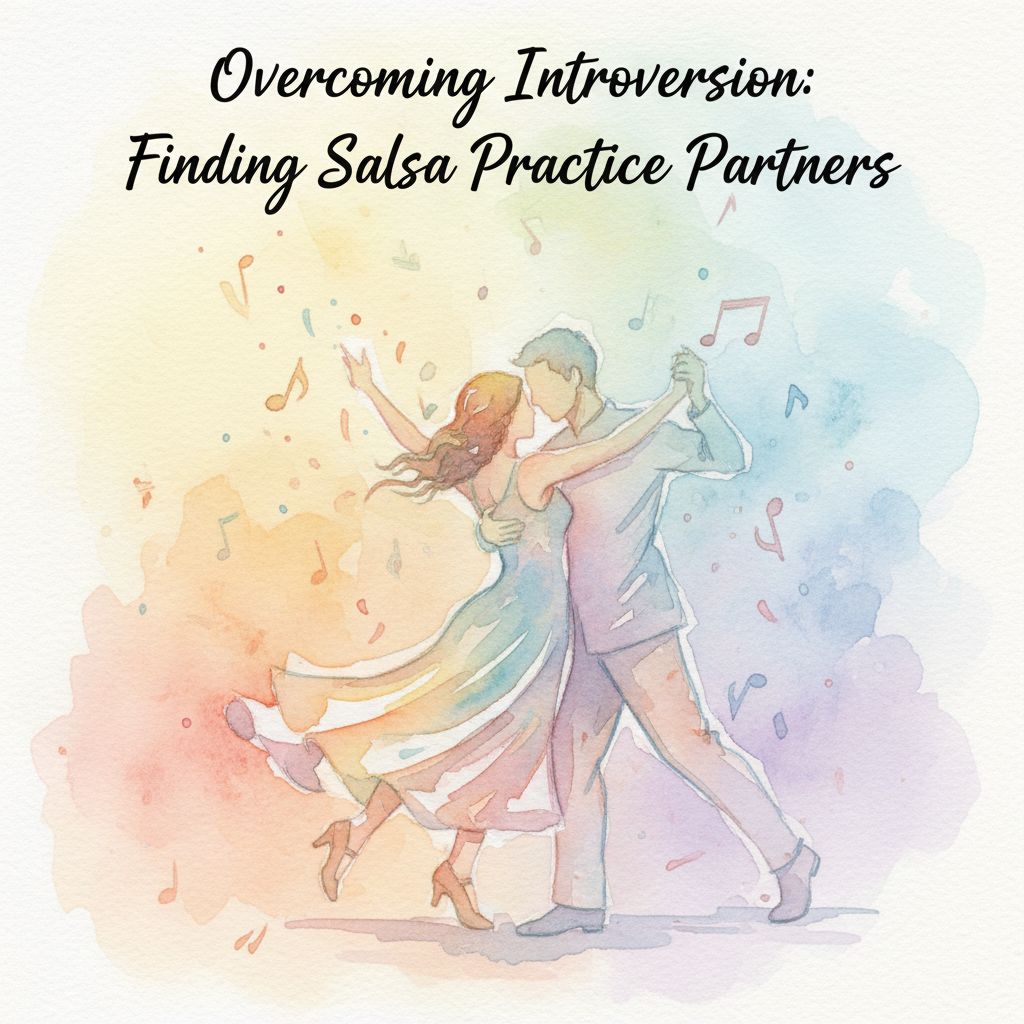
The easiest place for an introvert to find salsa practice partners is the class you already attend. Ask one classmate to run through that week’s material for 30 minutes, with a clear time, place and goal. Specific, low-stakes requests feel far less awkward than general ones, and most people in a class want extra practice too.
Many dancers love the music and the classes but freeze when it comes to asking someone to practice outside class. If that sounds familiar, you are in good company, and the problem is very solvable. For the wider learning path, see our guide to bachata for beginners. The advice here applies to salsa and bachata alike.
Is being an introvert a problem in salsa?
No. Introversion is a preference, not a flaw. Wikipedia’s overview of extraversion and introversion describes it as a preference for quieter, less stimulating settings, and points out that “introversion is a preference, while shyness stems from distress.” Introverts don’t necessarily fear social situations. They often just find them more tiring.
That matters, because the fix is different. If the issue is energy, plan short, structured practice with one person instead of big group sessions. If the issue is fear of rejection, the strategies further down help more.
Introverts also bring real strengths to partner dancing: attentiveness, patience, a good eye for detail, and the habit of practicing a skill quietly until it is solid. Many introverted dancers find that the structure of a partner dance (a clear role, a set length, a shared focus on the music) makes it easier to connect than ordinary small talk.
Why the fear feels bigger than it is
The fear usually comes from a feeling of not being good enough, especially next to dancers who seem far ahead. Two facts help:
- Everyone at a social or class started as a beginner. They have also stepped on toes, lost the beat and forgotten a move halfway through. Most remember it well.
- The worst case is a “no”. Being turned down for a practice session is mildly uncomfortable and then over. Each no gets you closer to someone who says yes.
Using logic against fear works better with a plan. Decide in advance who you’ll ask and what you’ll say, and the decision is already made by the time the nerves arrive.
Where can you find salsa practice partners?
| Where | Why it suits introverts | First step |
|---|---|---|
| Your current class | You already know each other and the material | Ask one classmate to review this week’s pattern |
| Class group chat | Asking in writing, no on-the-spot pressure | Start a chat for your class, or post in the existing one |
| After-class practice time | Structured, short, in a familiar place | Ask your school whether it runs open practice sessions |
| Local dance groups online | Low-pressure way to find people nearby | Join a local salsa group on a social or events platform |
| Socials | Many potential partners in one room | Ask one person per night, then build from there |
| Different levels | More experienced dancers can give feedback, newer ones let you experiment | Say yes to both |
You don’t need a regular partner to learn. The dance school Quicksteps notes that students can come solo and rotate partners in class, and describes group classes as the best way to meet new people in the community. Rotation is also the easiest way to meet potential practice partners without having to make the first move cold.
How do you ask someone to practice?
Make the request specific, short and easy to decline:
“Want to run through today’s turn pattern for half an hour before Thursday’s class? We could use the studio space at 7.”
What makes this work:
- A clear purpose. You’re asking to practice a specific thing. Being clear that the focus is dancing, and nothing else, keeps it comfortable for both people.
- A time limit. “Half an hour” is easier to say yes to than “sometime”.
- A known place. A studio, a school’s practice slot or a public space feels safe and neutral for both people.
- An easy out. If they say no, accept it with a smile. The Yami Shoes etiquette guide is clear that nobody is obligated to say yes and that a declined invitation shouldn’t be taken personally.
How do you build confidence one step at a time?
Big goals stall. Small ones compound. Set targets you can hit this week:
- Ask one classmate to practice this month.
- Attend one social a month, then two.
- Ask one person to dance at each social.
- Stay ten minutes after class to repeat the pattern with whoever is still there.
Each small win makes the next ask easier. Many dancers who started out very shy describe the same pattern: the first few asks are hard, and then it quietly stops being a big deal. Regular practice helps too. The better you know the material, the less exposed you feel when practicing it with someone else.
Practice session etiquette checklist
Good practice sessions are the ones both people want to repeat:
- Agree on the goal at the start: one pattern, one technique, or one song’s worth of styling.
- Make it reciprocal. Your partner should get something out of the session too, so ask what they want to work on.
- Give feedback only when invited. Ask “Do you want feedback on that?” before offering it, and keep it to one point at a time. Yami Shoes’ etiquette guide advises against correcting a partner who hasn’t asked.
- Check the floor if you practice outdoors or in a public space. Rough or uneven surfaces raise the risk of injuries in turns.
- Remember it’s not a performance. Focus on the work, not on passers-by.
- Leave room to experiment. Practice is the place to try variations and improvise, and to make mistakes without consequences.
- End on time, and thank them.
What if you still can’t find anyone?
Keep practicing solo in the meantime. Timing, the basic step, shines and body movement can all be trained alone. Our guide to practicing salsa on your own covers shadow dancing and a weekly plan. And keep showing up to class and socials. Familiar faces turn into practice partners far more often than strangers do.