The Bachata Shadow Position: How to Enter It, Waves, Musicality and Comfort
Part of: Leading and Following in Bachata: The Complete Guide
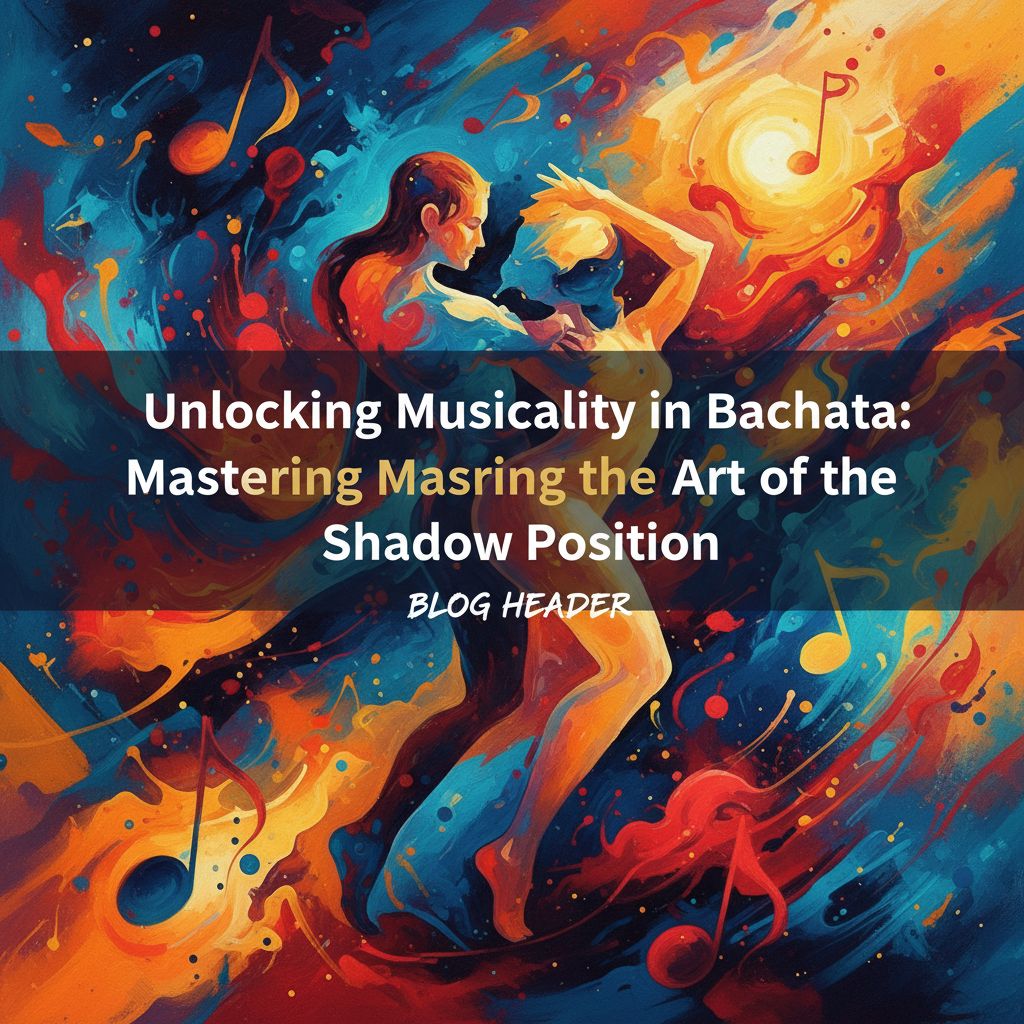
In the bachata shadow position, both partners face the same direction with the follower in front and the lead behind, like the follower’s shadow. The lead usually connects with a hand on the follower’s hip or waist and the other hand on the shoulder or holding the follower’s hand. It is common in sensual bachata for waves, body movement and slow musical moments.
Because the follower can’t see the lead, shadow position depends almost entirely on body connection: clear weight transfer, a stable frame and small signals through the hands and torso. Those basics are covered in our complete guide to leading and following in bachata. This page covers the position itself.
What does the shadow position look like?
- Facing: both partners face the same way. The follower stands in front, the lead directly or slightly to one side behind.
- Hands: the lead’s right hand is usually on the follower’s right hip or waist; the left hand rests on the follower’s left shoulder, holds the follower’s left hand, or lies along the follower’s left forearm.
- Distance: close enough for the lead’s chest to give a light signal to the follower’s upper back, but not pressed together. The follower should have room to step.
- Footwork: both partners step on the same foot in the same direction, in parallel rather than mirrored. Since partners facing each other dance on opposite feet, someone has to change feet on the way into shadow. Usually it’s the lead, with a small weight change (a cambio, for example stepping instead of tapping).
How do you lead into shadow position from a turn?
The most common sensual-style entry turns the follower and stops the turn halfway, so the follower ends up facing away from the lead.
- Prepare the turn as usual, a count or more ahead, with the hand that will lead it.
- Block on the hip. As the follower comes around, the lead’s right hand meets the follower’s hip and stops the rotation when they are facing the same direction as the lead. The block usually lands on the first count of a new half-measure (1 or 5), so the next basic starts cleanly in shadow. A firm, early block is clearer than a late grab.
- Settle the connection points. Right hand on the hip, left hand on the shoulder or arm. Many teachers add a third point by laying the lead’s left forearm along the follower’s left arm, which keeps the follower’s arm connected to the lead’s torso and makes the next move easier to feel.
- Optional styling: in some versions the lead guides the follower’s free hand up and back so it rests behind the lead’s head or neck. That adds a point of contact but also makes the move harder; learn the entry without it first and add it once the block is reliable.
A useful detail: which side of the lead’s chest touches the follower’s back depends on which way the turn went. In the entry described above, the lead’s right side of the chest ends up against the follower’s left shoulder blade. If the turn goes the other way, the contact switches sides, and many dancers find that version less familiar and more awkward.
How do you lead a wave in shadow position?
A wave in shadow is led from the lead’s own body, not pushed with the hands.
- Timing: a typical shadow wave runs over four counts, for example starting on 1 and finishing on 4, then returning to the basic.
- Initiation: the lead starts the wave in their own chest and lets it travel down through the hips and knees. Through the light chest-to-back contact, the follower feels the movement and answers with their own wave, a call and response.
- The push-out: before the wave, some leads use a small “push out” on 7-8: the lead’s chest connects with the follower’s back and sends them a little forward, which sets up the space for the wave on the next 1.
- Keep it within range: a wave in shadow should follow the follower’s own range of movement. Leading it bigger or faster than they can comfortably make it is uncomfortable, especially for the neck and lower back.
From shadow, leads often continue into a turn back to face each other, a hand-change or, with experienced partners, more advanced figures such as the dip and flip.
When should you use shadow position musically?
There is no fixed “right moment”; it’s an interpretation choice. Some practical guidelines leads use:
- Transition at the back of the measure. Counts 3-4 or 7-8 make natural points to prepare a change of position, so the new position starts with the phrase.
- Use breaks and pauses. The moment just before a pause in the music is a good time to arrive in shadow and then hold a wave or a stillness.
- Match the section. Shadow suits slower, smoother or more sensual sections, but it can also be used for playful footwork in parallel during energetic parts.
- Vary it. A useful practice exercise is to change position (closed, open, shadow) with each new section of a song, so transitions become a musical choice instead of a habit.
- Adapt to your partner. If the follower needs a beat to settle, give it. A rushed entry undoes the connection the position needs.
Shadow position comfort and boundaries
Shadow position brings partners close, and the follower can’t see what the lead is doing, so not everyone enjoys it. That is a normal preference, and good leads respect it without fuss. For more on closeness generally, see our guide to dancing close in bachata.
For leads
- Keep hands where they were placed: hip, waist, shoulder, arm. No wandering.
- Keep the chest contact light and the hips back; the follower needs room to step.
- Make the exit easy: if the follower turns out of the block or stiffens, let them go and continue in open or closed position.
- With a new partner, use shadow sparingly until you know they’re comfortable.
For followers who prefer to avoid it
- Say it up front. When accepting a dance, a simple “I’d rather skip shadow position” is enough.
- Turn through the block. If you’re led into shadow, you can keep turning past the hip block and end facing the lead. This is a common, polite way to decline in the moment.
- Step out on the phrase. Release, turn out under the arm on the next phrase and pick up the hand again in open position.
- Know the style. Sensual bachata uses shadow position a lot; dances that stay closer to Dominican or traditional social bachata usually use it less.
FAQ
Is shadow position only for sensual bachata?
No, but it is most common there. Many leads use it in any style for a phrase or two, often for simple parallel footwork.
Why does my follower keep turning out of shadow?
Usually the block is late or too soft, so the follower doesn’t feel where the turn stops. Block earlier and more clearly with the hand on the hip. If it keeps happening with one person, they may simply prefer not to dance in shadow.
Do I need the hand-behind-the-head styling?
No. It is optional styling. The position works fine with the follower’s hands down or held by the lead.