How to Dance Close in Bachata Comfortably and Respectfully
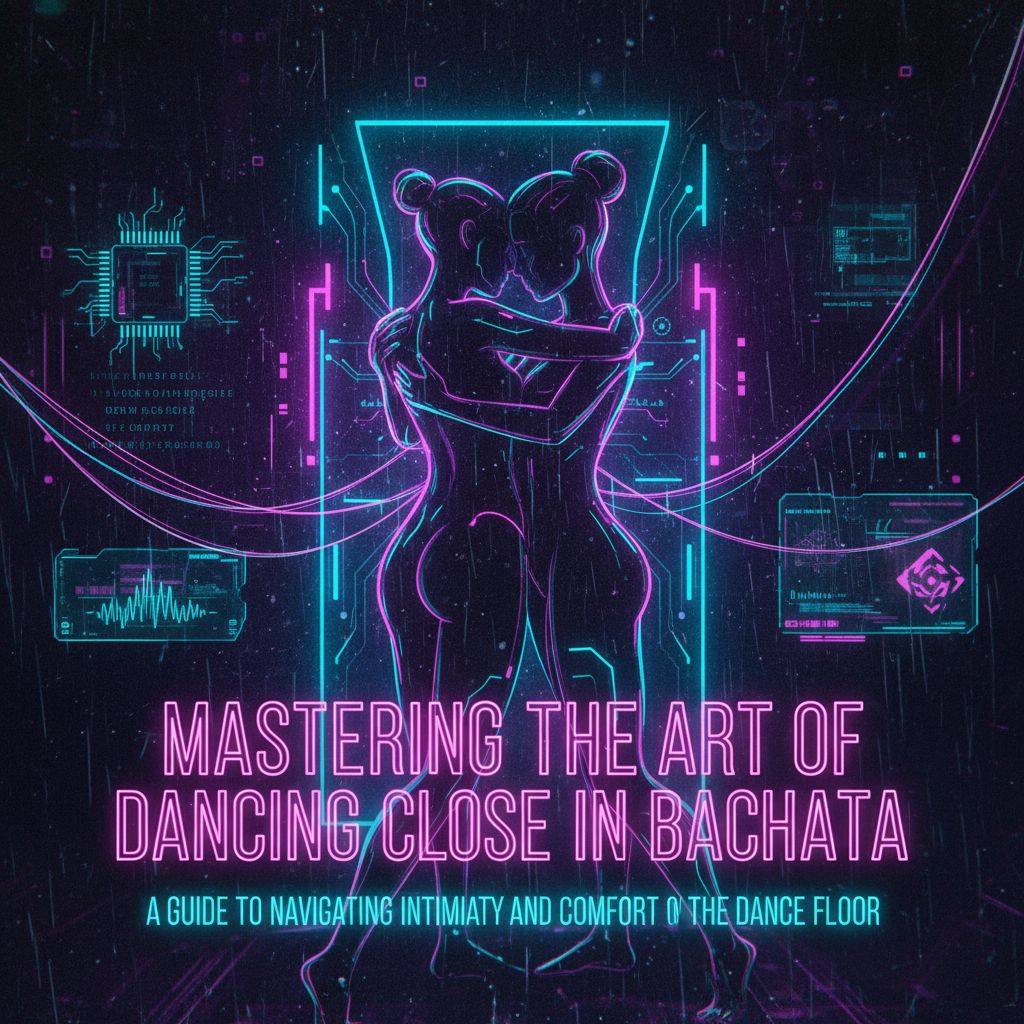
To dance close in bachata comfortably, start in open or semi-closed position, close the hold gradually, and let the partner who wants less contact set the distance. A good close hold depends on posture and a responsive frame rather than squeezing, and either dancer should be able to open it again at any moment without a struggle.
What does “dancing close” mean in bachata?
Bachata is danced in open, semi-closed and closed position, and much of the confusion about dancing close comes from mixing these up:
- Open position: partners face each other connected only through the hands.
- Closed position: the leader’s right hand is on the follower’s back, the follower’s left hand rests on the leader’s shoulder or upper arm, and the leader’s left hand holds the follower’s right at about shoulder height.
- Close embrace: a closed position where the torsos touch or nearly touch.
In its early form, bachata was danced only in closed position, like the bolero, often in a close embrace. Today, Dominican bachata keeps a close partner connection, bachata moderna alternates between close and open position, and sensual bachata uses body waves and circular movements in close position (Wikipedia: Bachata (dance)).
“Close” is a range, not a single setting. The gap between partners can be anything from a forearm’s length to full upper-body contact, and it can change several times in one song.
How do you hold a close frame correctly?
A comfortable close hold is built on each dancer’s own posture. Nobody should be hanging on, leaning into, or being pulled against the other person.
- Stand on your own balance. Tall spine, chest lifted, knees soft, weight over the balls of the feet. If either partner would fall over when the other stepped away, the hold is too dependent.
- Leader’s right hand: flat on the follower’s back around the shoulder blade or a little lower, supporting rather than gripping. It holds the shape of the frame; it does not pull.
- Follower’s left arm: resting on the leader’s shoulder or upper arm with some tone, so it can act as a gentle buffer and adjust the distance.
- Joined hands: around shoulder height with soft, slightly bent elbows. Bringing them closer to the bodies narrows the space; extending them widens it.
- Smaller steps. In close position the basic (three steps and a tap with a hip accent on 4 and 8) gets smaller. Big side steps pull partners apart or make them collide.
- Offset the feet slightly so knees and toes don’t clash.
- Lead through the body. In a close hold, direction and rhythm come through the torso and the right hand, so leaders need to prepare changes a count or more ahead instead of yanking the joined hands. Our complete guide to leading and following in bachata covers tone, tension and compression in the frame in more detail.
One point from traditional dancers is worth borrowing: a close hold looks more intimate from the outside than it feels. Many couples keep a small gap at the chest or hips while the frame does the communicating, which reads as close on the floor but leaves both partners room.
How do you start open and close the distance gradually?
With a new partner, the safest default is to start every dance in open or semi-closed position and let closeness develop only if both people move into it.
- Dance a few bars of basic with space. This gives both partners time to read each other’s comfort, timing and level.
- Offer, don’t pull. A leader can soften the frame or bring the joined hands slightly in, which gives the follower the option to step closer. If the follower steps in, the closeness is mutual. If their arm stays firm, stay where you are.
- Ask when unsure. A verbal check such as “Would you like to dance close?” is fine, and so is a slow, questioning invitation that is easy to decline (Portland Country Dance Community).
- Open up for turns and patterns, then return to the close hold only if both still seem comfortable.
- Keep checking. Comfort can change within a song, especially as the music slows down or the room gets hotter.
The Portland community’s consent guidance puts the principle simply: the level of intimacy in a dance should default to the comfort level of the person who wants the least intimacy. That rule works just as well in bachata.
Who decides how close you dance?
In practice, the more reserved partner does. The leader usually sets the starting position, but followers have the right to their own space and can shape it through their body: a firmer arm on the shoulder, joined hands kept between the bodies, or a step back into semi-closed or open position (Movers and Shakers Dance).
The same applies in the other direction. Experienced followers sometimes close the distance themselves. That is an invitation, not an obligation, and a leader who is not comfortable can keep a semi-closed frame without making it awkward. Nobody needs to explain why they prefer more space.
What are the signs that a partner is uncomfortable?
Most of this communication is non-verbal, so it pays to know the common signals and how to respond:
| Sign | What to do |
|---|---|
| The arm on the shoulder locks straight or presses back | Open the hold and keep that distance for the rest of the song |
| Leaning back from the hips, stiff upper body | Give more space and simplify the patterns |
| Head turned away, little or no eye contact | Avoid any head contact; move to semi-closed |
| No response when you offer to close the hold | Stay in open or semi-closed position |
| Short answers, ending the dance early or declining another song | Thank them and let it go; don’t ask why |
If a partner opens the hold, keep the new distance. Drifting back in a few counts later is a frequent complaint in community discussions, and some instructors describe a partner who immediately pulls someone back in as a red flag.
How do you avoid crossing boundaries?
A frequent worry, especially among new leads, is coming across as creepy in closed position. Partners judge behaviour, not intentions, so the practical habits matter more than meaning well:
- Keep hands on the frame points. The back around the shoulder blade, the shoulder or upper arm, and the hands. Hands should not slide lower down the back, onto the hips or legs outside a clearly led move.
- No head or forehead contact with someone you don’t know. It is more intimate than many people realise; what cheek-to-cheek and other close contact usually mean in bachata is explained in our article on touch.
- Save trust moves for trust. Body rolls into the partner, dips and headrolls need clear consent and a partner who is clearly comfortable. With a new partner, simpler is better.
- Don’t comment on bodies, and keep conversation during a close hold light.
- Release cleanly at the end. Let go of the hold when the song ends, say thank you and step back. Lingering in the embrace is a common source of discomfort.
How can shy dancers get more comfortable dancing close?
Some dancers, both leaders and followers, find close position awkward at first, particularly if they are naturally reserved or worried about being misread. Instructors commonly suggest:
- Practising the close hold in class or with a trusted friend who can give honest feedback.
- Using short close sections inside a mostly open dance, and lengthening them only as it feels natural.
- Focusing on the music and the frame rather than on the contact itself.
- Accepting that open position is a perfectly good way to dance. Many experienced dancers spend most of a song apart.
FAQ
Is it rude to dance bachata in open position?
No. Bachata works in open, semi-closed and closed position, and many dancers prefer open position with new partners. Closeness is something two people reach together, not a requirement.
What if a partner pulls me closer than I want?
Create space through the frame: firm up the arm on the shoulder or bring the joined hands between you, and step back into semi-closed or open position. If it happens again, ask for more space. If it continues, it is fine to end the dance.
How close is the traditional Dominican hold?
Traditional bachata grew out of a closed-position, bolero-style dance, and Dominican style still keeps a close, connected hold with quick footwork. Close still does not have to mean pressed together: the frame can stay connected with a small gap between the bodies.