Leading vs Following in Bachata: Differences, Which to Learn, and Switching Roles
Part of: Leading and Following in Bachata: The Complete Guide
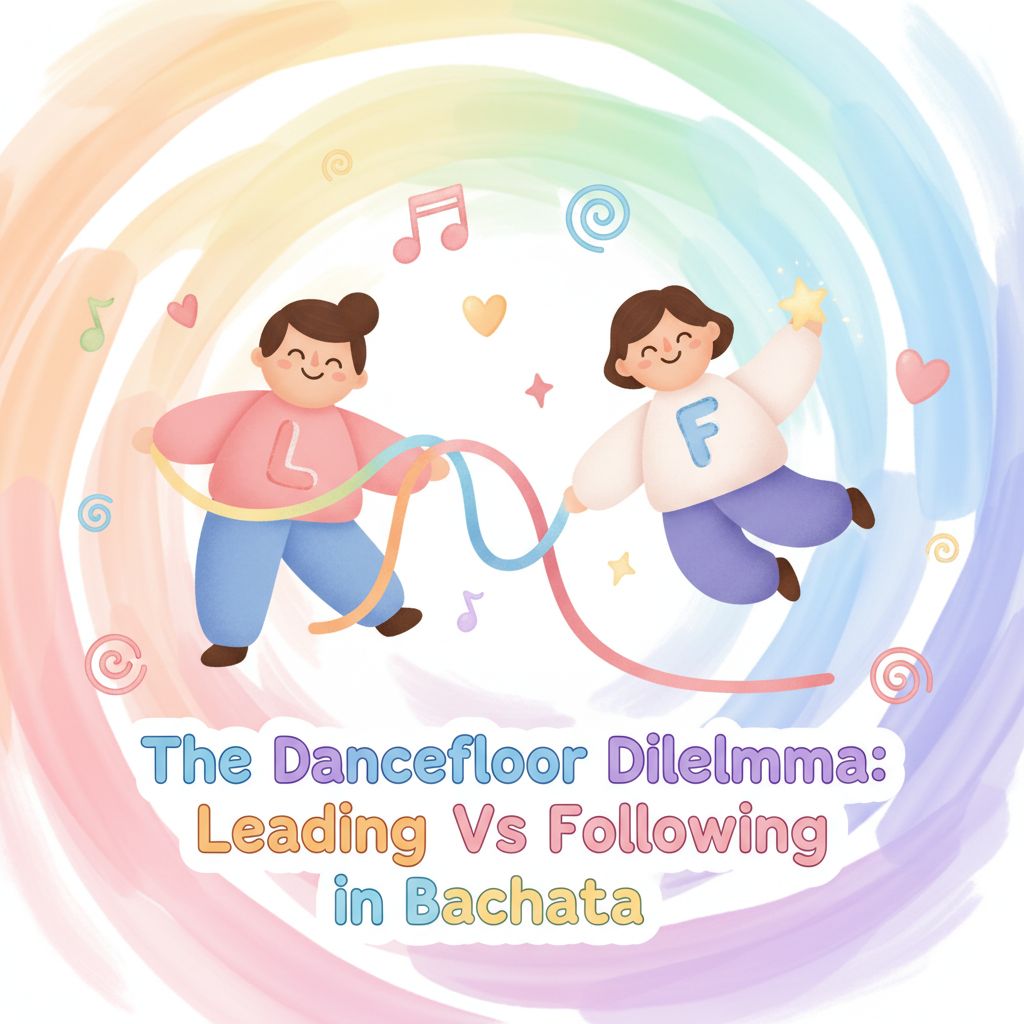
In bachata, the lead proposes the dance: they choose the figures, set the timing, steer around the floor and communicate all of it through the frame. The follow reads those proposals, completes each movement with their own balance and adds their own interpretation. Neither role is easier. Leads usually face a steeper start, while the follower’s challenges tend to grow as the dancing gets more advanced.
This page compares the two roles and covers switching between them. For the technique of each role, see our complete guide to leading and following in bachata.
What is the difference between leading and following?
The roles are defined by what each dancer does in the partnership, not by who they are. In the words of the Wikipedia article on lead and follow, the leader guides the couple and chooses the steps, and the follower responds to the leader’s signals, with the physical connection running in both directions.
| Lead | Follow | |
|---|---|---|
| Main job | Choose figures, set timing, protect the couple on a crowded floor | Read the lead, complete each movement with their own balance, interpret the music |
| Typical early challenge | Doing several things at once: footwork, count, next figure, partner, other couples | Waiting for the lead instead of guessing; turning without losing balance |
| Typical later challenge | Leading with less force and more musicality; adapting to every partner | Following unfamiliar or unclear leads; styling without disrupting the lead |
| Skills that matter most | Clear preparations, a relaxed frame, floorcraft, choosing moves the partner can do | Consistent frame and tone, balance and spotting in turns, patience, responsiveness |
| What partners appreciate | Safety, clarity, music-driven choices over move count | Responsiveness, a frame that transmits information, their own expression |
Is leading or following harder?
Each is hard in a different way. New leads are often overwhelmed because they manage everything at once: keeping the count, remembering what comes next, watching the floor and looking after a partner. Once those tasks become automatic, leading gets more enjoyable.
Following looks simpler at the start, since a beginner follow mainly has to keep time and respond. As leads become more varied and less predictable, though, follows have to read subtle signals, stay balanced through faster turns and add styling without throwing the lead off. Dancers who have learned both roles commonly say the difficulty moves around rather than going away.
Which role should you learn first?
There’s no single right answer. A few practical points help:
- Pick the role that interests you more. Motivation matters more than a theoretical advantage.
- Look at your local classes. Class ratios vary from city to city. Where one role is in short supply, learning it can mean more practice and more dances.
- Consider your partner, if you dance as a couple. Many couples start in complementary roles so they can practise together, and some later swap.
- Finish a beginner course in one role before adding the second, if switching early feels confusing. Plenty of dancers learn both from the start, though, and find it deepens their understanding.
Can women lead and men follow?
Yes. Traditionally men led and women followed, and many scenes still default to that, but the roles describe a job in the dance, not a gender. Female leads, male follows and same-sex partnerships are increasingly common at classes and socials.
Common advice for dancers who choose a less traditional role:
- Say what you’d like to do. Being upfront (“I’d love to lead this one, is that OK?”) clears up misunderstandings at the start of the dance.
- Ask people you know enjoy the other role. Followers who also lead, or dancers you’ve seen switching, are the easiest partners to start with.
- Respect a no. Some dancers prefer traditional roles or aren’t comfortable with a particular partnership. Every dance is by mutual agreement.
- Instructors set the tone. Classes that say “anyone can lead, anyone can follow” and let students choose their role make switching normal for everyone.
Comfort and consent apply in every combination of partners. Nobody should feel pressured into a dance, and nobody should be mocked for the role they choose.
How do leads learn to follow?
Experienced leads who start following often describe it as unlearning:
- Take a beginner class in the follow role. It covers fundamentals, such as turn technique and waiting for the lead, that advanced classes skip.
- Ask clearly. “Would you mind leading? I’m practising following” sets expectations.
- Respond to the lead, not to the sequence you know. Knowing the pattern makes it tempting to anticipate it. Executing a move without waiting for the lead is called backleading and is generally treated as a bad habit.
- Keep steps small and feet close in turns, so you don’t travel too far.
- Keep a consistent frame. It’s how the lead’s information reaches you.
- Offer to follow when a class is unbalanced. It’s good practice and helps normalise role switching.
How do follows learn to lead?
There’s no “right” time to start leading. Some follows switch after finishing a beginner course, others after years of following. Common observations:
- Experience as a follow is a real advantage. You already know how clear, comfortable leading feels, and you know what unclear leading feels like.
- The new workload is planning: counting, choosing the next figure, preparing it in time and watching the floor. Expect the first months to feel awkward.
- Patience with your own partners and an emphasis on comfort, which follows often understand well, are qualities many dancers associate with good leads.
- If you learn both roles at once, keep some balance so one doesn’t stall completely.
What does learning the other role do for your dancing?
Dancers who switch roles commonly report that:
- Leads become clearer and gentler after feeling heavy-handed leads themselves.
- Follows understand preparations and timing better, so they follow less unclear leads and backlead less.
- Both roles develop a better sense of the shared connection, the two-way conversation through the frame.
- It’s easier to help a partner in practice when you know what their side feels like.
The site’s guides to bachata leading signals and to following technique in bachata go deeper into each role.
FAQ
Is it rude to ask someone to switch roles?
No, as long as you ask before the dance starts and accept the answer. Some dancers love switching; others only dance one role.
Can partners switch roles in the middle of a dance?
Some experienced dancers do, and occasionally a follow briefly takes over the lead (sometimes called hijacking). It only works with a partner who knows and enjoys it, and it needs a clear, playful connection. Don’t spring it on strangers.
Do follows need to know the moves?
Not by name. A good follow responds to the lead in the moment, which is why follows can dance with leads from other schools. Knowing common figures does help with balance and comfort.
Should I stick to one role at socials?
That’s up to you. Many dancers who know both roles decide song by song, depending on the partner and the music.