Wide Dance Shoes for Bachata and Salsa: Wide Toe Box and Big-Foot Options
Part of: Salsa and Bachata Dance Shoes: How to Choose the Right Pair
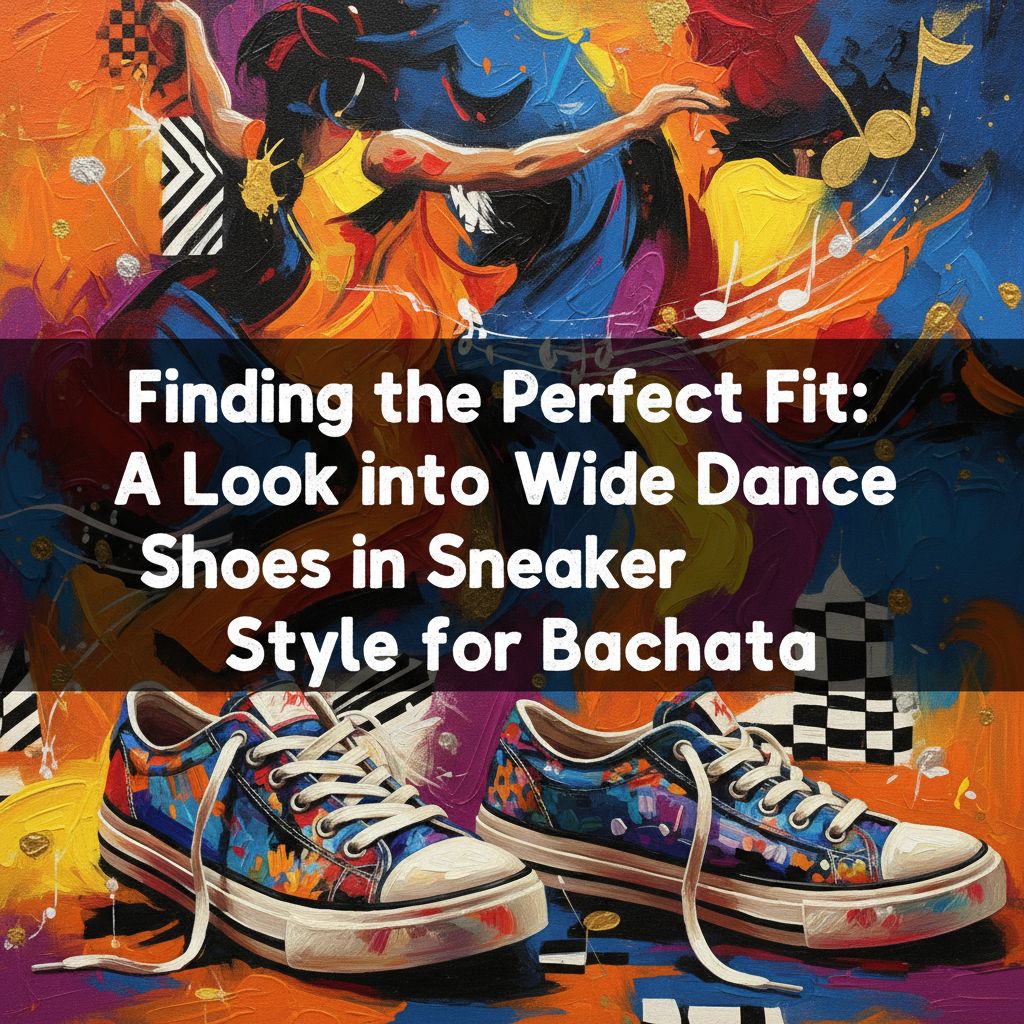
Most popular dance-sneaker brands, including Fuego, Yami and Taygra, make a single standard width. Their own advice for wide feet is to go up half a size or to choose their roomiest models. If that still doesn’t fit, dancers with wide or very large feet often turn to wide-toe-box shoes with smooth soles, custom-made dance shoes, or adapted street sneakers.
This article covers width and size. For sole types, brands and what to wear, see our guide to salsa and bachata dance shoes.
Why does width matter so much on the dance floor?
Salsa and bachata put a lot of weight on the front of the foot. You pivot on the ball of the foot, rise into turns and shift weight on almost every beat. In a shoe that’s too narrow, the forefoot has nowhere to spread under that load. Dancers with wide feet describe the same problems again and again: squeezed toes, numbness or burning by the end of the night, blisters along the sides of the foot, and having to sit out songs to let their feet recover.
A shoe that’s too wide causes the opposite problem. The foot slides inside the shoe during turns, which feels unstable and can cause blisters too. What you’re after is room across the toes with a secure heel and midfoot, not simply a bigger shoe.
Traditional Latin and ballroom shoes are often cut narrow at the toe, which is one reason many wide-footed dancers end up in dance sneakers.
What do the main dance-sneaker brands say about width?
Here’s what the brands themselves state about width and fit:
| Brand | Width offered | The brand’s advice for wider feet |
|---|---|---|
| Fuego | “Our shoes are all standard width” | Order half a size larger if your feet run a little wide |
| Yami | USA standard width, “neither narrow or wide” | Go half a size larger |
| Taygra | One regular (medium) width | Choose the Corrida, Urbano, Urbano Mid-Top or Yacht. Taygra calls the Urbano models “our widest models”, with a sturdier upper and thicker sole. Some wide-footed customers go one size up |
| Bloch dance sneakers | Not specified | Bloch says its dance sneakers “generally run small” and suggests going up half to a full size |
The pattern is clear: none of these brands sells a dedicated wide fit for their dance sneakers, so wide-footed dancers usually size up or pick the roomiest last in the range. Fit varies between models within the same brand, so check the brand’s size guide and any notes on specific models before ordering.
How do you size up without losing control?
Going up half a size adds width, but it also adds length. That can leave extra space at the toe and let the heel lift during turns. A few common fixes:
- Lace for the heel. Tighten the laces around the midfoot and use the top eyelets to lock the heel down, so the extra length doesn’t turn into sliding.
- Use a slim insole or heel grip if the shoe is a little long but the width is right.
- Try shoes on later in the day, when feet are at their largest after hours of walking.
- Test indoors first. Do basics, rock steps and slow pivots on a clean floor at home before wearing new shoes to a social, so they’re still in returnable condition if the fit is wrong.
- Check the spin spot position. On a dance sneaker, the pivot area should sit under the ball of your foot. If sizing up moves it noticeably forward, that model may not suit your foot.
What are the options beyond standard dance sneakers?
When standard-width dance sneakers don’t work, dancers commonly try:
- Wide-toe-box or “barefoot” shoes. Their foot-shaped toe box and flexible sole appeal to many dancers. Look for a sole that’s smooth enough to pivot on. They’re thin and flat by design, so they suit dancers who like floor feel more than cushioning, and they aren’t ideal for everyone who needs orthotic insoles or extra support.
- Custom-made dance shoes. They cost more, but they’re often the only real solution for very wide, very long or asymmetric feet. Many dancers who’ve gone this route say it’s worth it once they’re dancing several times a week.
- Adapted street sneakers. A comfortable, wide sneaker with a fairly flat sole can be made more dance-friendly with a suede patch under the forefoot or a strip of tape to reduce grip. Our article on choosing the best shoes for bachata covers these tweaks and how sole grip affects your knees.
- Leather uppers. Leather tends to give a little and mould to the foot over time, so a leather shoe that’s only slightly snug may become comfortable after breaking in. A synthetic upper that’s tight on day one usually stays tight.
If you wear orthotic insoles, take them with you when trying shoes, or check the shoe has a removable insole and enough depth. A shoe that fits well without the orthotic may be too tight with it.
What if you have big feet?
Leads with large feet face a slightly different problem: finding the size at all. Many dance-shoe ranges are stocked mainly in mid sizes, so the largest sizes sell out first or aren’t made in every model. Some practical routes:
- Check the size chart before falling for a model. The largest size isn’t always the same across a brand’s range.
- Consider unisex or men’s models. Women with long or wide feet sometimes find men’s dance sneakers fit better, and vice versa for narrow feet.
- Custom-made shoes solve both length and width at once.
- Don’t wait for the perfect shoe to start dancing. Plenty of dancers with hard-to-fit feet dance in comfortable street sneakers with smooth, flat soles while they search. Comfort and safety matter more than having “proper” dance shoes, especially in your first months.
Fit checklist for wide feet
- Your toes can spread and wiggle when you rise onto the ball of your foot
- No pressure points along the sides of the forefoot after 20–30 minutes
- The heel stays down when you pivot and when you walk briskly
- The spin spot or smoothest part of the sole sits under the ball of your foot
- Your insoles or orthotics fit without crushing the top of your foot
- The shoe still feels fine at the end of a full evening, not just in the first five minutes
Finding wide dance shoes takes more trial and error than it should. But once you’ve found a pair that doesn’t hurt, you’ll be able to focus on your dancing instead of your feet.