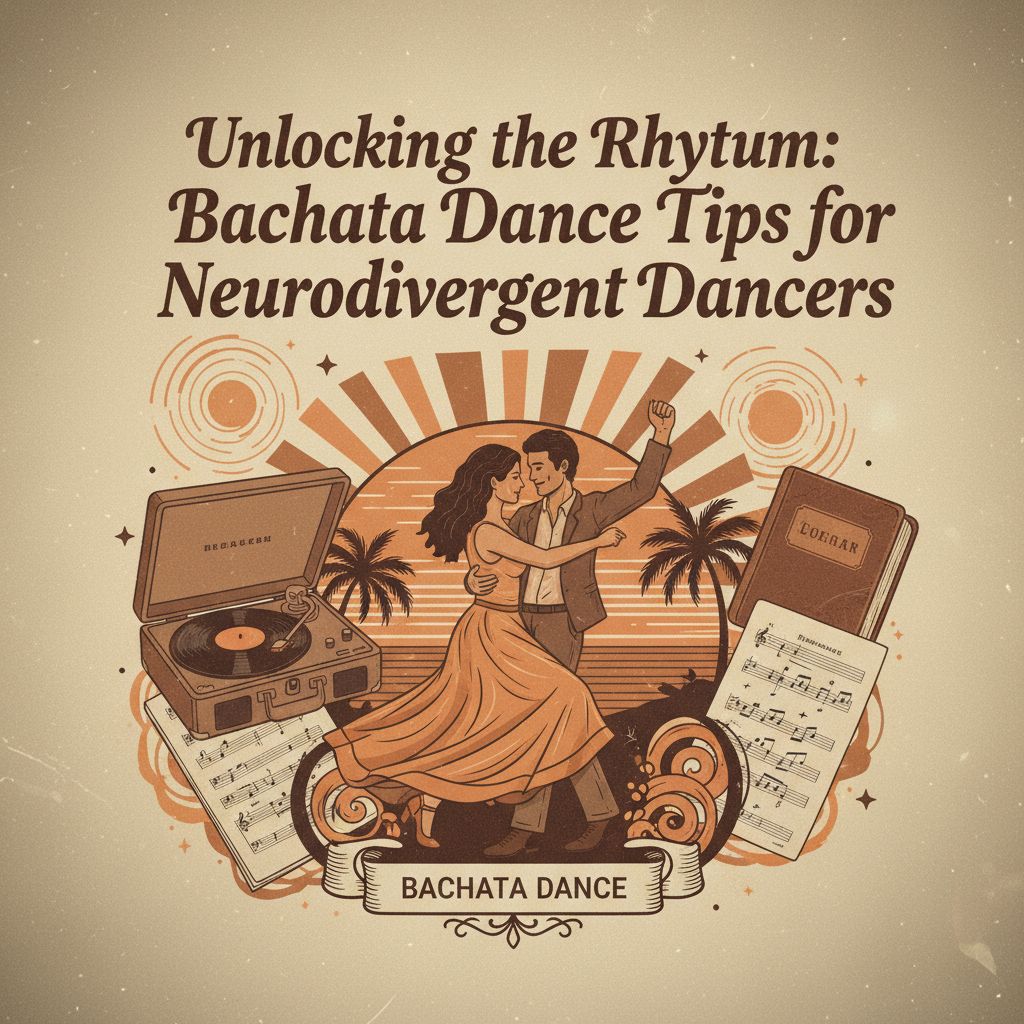
Unlocking the Rhythm: Bachata Dance Tips for Neurodivergent Dancers
Embracing the Challenges and Celebrating Uniqueness
In the vibrant world of Bachata, dance moves and steps are not just about rhythm and coordination, but also about communication and connection. For neurodivergent individuals who may face unique challenges in motor coordination and nonverbal communication, the dance floor can initially seem a daunting place. However, by leveraging their unique strengths and continuously practicing, neurodiverse dancers can find their groove and truly enjoy the enriching experience of Bachata.
Understanding the Learning Curve
First off, it’s crucial to recognize that everyone has their own learning pace. In the initial weeks of any dance class, the majority of students grapple with staying on the beat or leading with confidence. Frustration is a universal part of the learning process, but it doesn’t denote a lack of progress or potential.
Strategies to Improve Coordination and Technique Execution
As a neurodivergent dancer, you may need to approach learning differently. Here are a few strategies that could help.
Play to Your Strengths
Start by identifying your strengths and learning style. If you excel in verbal ability, consider taking detailed notes about the techniques. Write down the steps, the body positions, and the timing. Creating this mental model can bridge the gaps and help you internalize the dance moves.
Break Down the Moves
Rather than trying to perform an entire sequence at once, break down the dance moves into smaller, manageable parts. Practice these parts individually until you feel comfortable with each one. This method can help in building muscle memory and improving coordination.
Building Nonverbal Communication Skills
Bachata, like most partner dances, relies heavily on nonverbal communication. It’s not just about the steps, but also about signaling your intentions to your partner.
Practice with a Trustworthy Partner
Find a dance partner who understands your unique needs and is patient. Practice with them regularly. Over time, this will help you become more comfortable with nonverbal communication and leading.
Focus on Body Language
Pay special attention to body language. This includes your partner’s responses to your movements, as well as your own posture and hand positions. Remember, confidence can be communicated through body language and can significantly impact how your dance partner perceives and reacts to your moves.
Remember the Joy of Dancing
Finally, never forget that dancing is about joy and connection. It’s not about perfect technique or flawless execution. As long as you’re enjoying the dance, you’re doing it right. Don’t let a fear of making mistakes rob you of the fun and fulfillment that Bachata can bring.
In conclusion, Bachata can be a wonderful platform for neurodivergent individuals to express themselves, connect with others, and even challenge their unique struggles in a positive, empowering way.