Understanding The Posture Debate in Bachata Dance
Part of: Leading and Following in Bachata: The Complete Guide
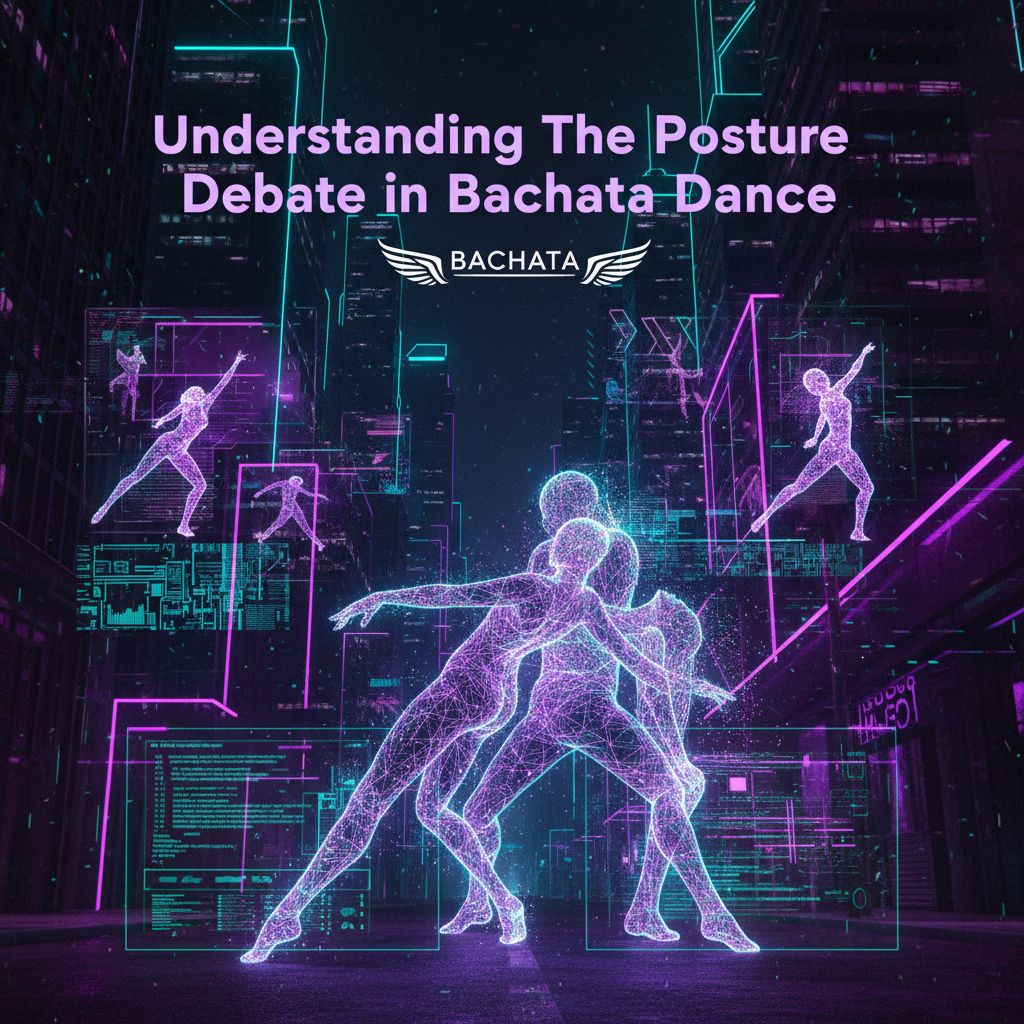
The “hips pushed back” stance some bachata followers use, with the backside out and the lower back strongly arched, is a styling trend popularised by social media, not a taught standard. Most instructors teach a neutral, upright posture: a long spine, engaged core and soft knees. An exaggerated arch can upset balance, weaken the frame and load the lower back.
Posture matters for both roles because it is where connection starts. A follower with a stable, neutral posture is easier to lead, and a lead with good posture gives clearer signals. Both points are covered in our complete guide to leading and following in bachata.
What is the posture debate about?
Bachata is known for its sensual movement and close connection between partners. One topic that comes up often in the dance community is the follower’s stance, specifically the habit of some followers of pushing the hips back to accentuate the backside. The posture is common in photos and videos, which is why it attracts debate.
How does it affect dance technique?
This exaggerated hip position is not a universally taught standard. Many instructors stress a straight, natural posture and argue that sticking the backside out can:
- Disrupt balance, because the weight shifts back toward the heels and away from the balls of the feet.
- Weaken the frame, because an over-arched lower back disconnects the upper body from the legs, so the lead’s signals don’t travel cleanly.
- Load the lower back. A strongly arched lower back with the pelvis tipped forward is the shape clinicians describe as lordosis or swayback. When the curve is pronounced it can contribute to lower back pain (Cleveland Clinic), and excessive arching of the lower back is noted to be common in dancers (Wikipedia: Lumbar hyperlordosis).
Bachata hip movement doesn’t need the exaggerated pose anyway. It comes from weight transfer and knee action, as explained in our guide to hip and body movement in bachata.
Why do some followers adopt this pose?
Much of it comes from social media. The stance looks striking in photos and short videos, and many followers copy what they see there. The risk is that looking good on camera takes priority over what makes bachata work on the social floor: connection, musicality and technical precision.
Adapting to variations in dance styles
Staying open to different interpretations
Bachata has evolved from its roots in the Dominican Republic into several modern styles, including sensual bachata, and the postures and techniques dancers use have changed with it. Not every difference from the classic upright stance is a mistake.
Respecting individual styles
Some followers naturally stand differently from the traditional straight stance, because of their build, flexibility or a background in other dance styles. Differences like these are individual expression, not flaws. The concern is a posture held for effect at the cost of balance and comfort.
Maintaining the essence of bachata
Striking a balance
Modern influences can bring exciting variations to the dance, but technique, musicality and connection should stay at its centre. Styling works best when it sits on top of a sound posture rather than replacing it.
Encouraging healthy dance practices
Whatever the style, posture should protect the dancer’s body. A quick self-check:
- Spine long, crown of the head lifted.
- Ribs stacked over the pelvis rather than flared forward.
- Core lightly engaged, glutes relaxed rather than pushed back.
- Knees soft, weight over the balls of the feet.
Instructors can help by teaching correct posture early and explaining the trade-offs of exaggerated poses. Anyone with ongoing back pain from dancing should see a doctor or physiotherapist rather than dancing through it.
The posture debate reflects how quickly bachata keeps changing. Respecting where the dance comes from, staying open to how it evolves and looking after your own body are all compatible, and together they make for better dancing.