When Your Dance Partner Is Your Crush: Attraction and Dating in Bachata
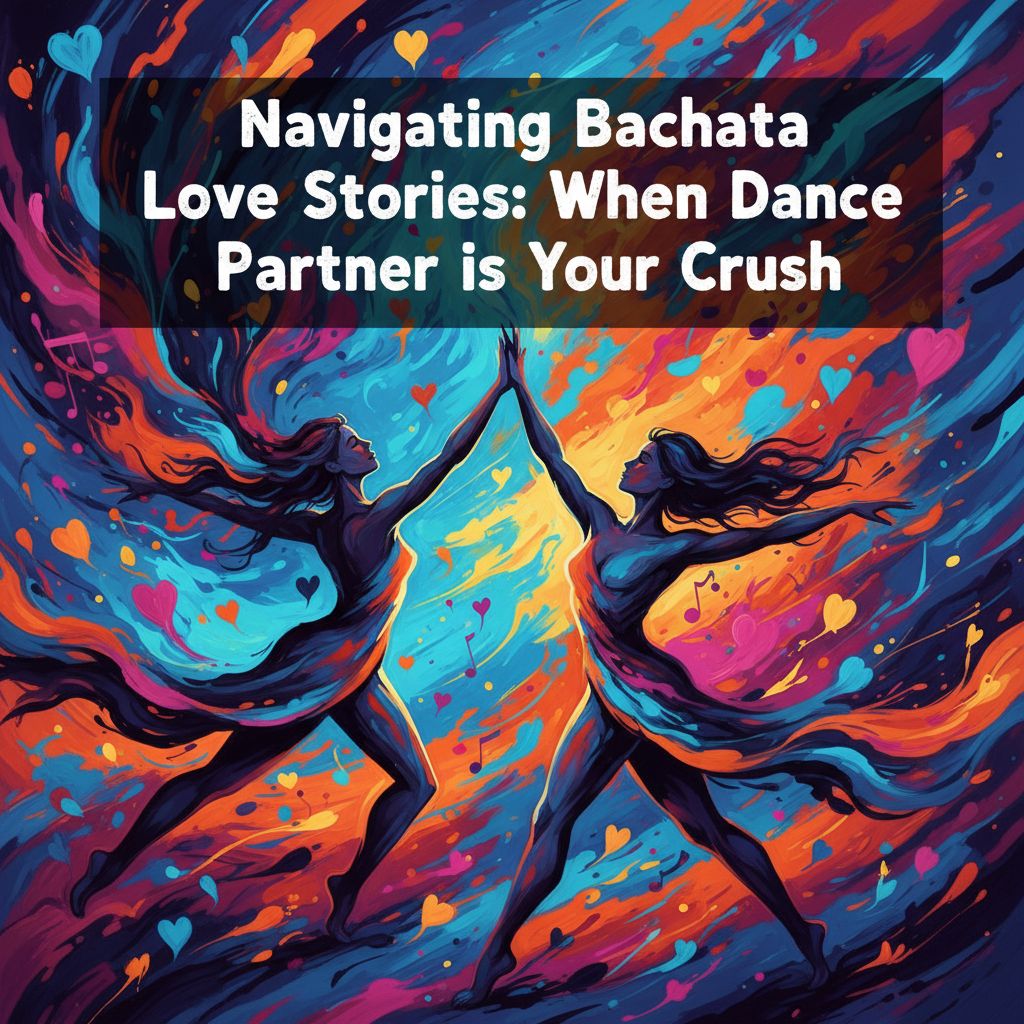
Having a crush on a dance partner is common in bachata, because the music, the close hold and the eye contact create real chemistry. That chemistry is not proof of romantic interest, though. The respectful approach is to keep the dance itself free of pressure, show interest off the floor with one clear, low-stakes invitation, and accept the answer gracefully.
Why do crushes happen so often in bachata?
Bachata puts people in a close hold to slow, romantic music, often with the same partners every week. Add eye contact, shared excitement about learning, and the rush of nailing a musical break together, and it is easy for admiration to turn into a crush. In community discussions, many dancers describe the moment when two people hit a pause or a change in the song at exactly the same time as one of the most connected feelings in social dancing.
It helps to separate two kinds of crush:
- A dance crush: admiration for someone’s dancing, energy and connection. Many dancers have dance crushes they would never want to date; they simply love dancing with that person.
- A romantic crush: interest in the person beyond the dance, which needs to be handled off the floor.
Both are normal. The trouble starts when the first is mistaken for the second, by either person.
Is dance chemistry the same as romantic chemistry?
No. Close contact, eye contact and expressive faces are part of how bachata is danced, so they say very little about how someone feels about their partner (see why close contact in bachata usually isn’t a romantic signal). Professional bachata couples show this clearly: performances can look intensely romantic, but the emotion is part of the choreography, and many successful partnerships are working relationships between people with separate private lives. Social dancers do a smaller version of the same thing when they interpret the music.
| Usually dance chemistry | More likely personal interest |
|---|---|
| Eye contact and an expressive face during a song | Seeking someone out to talk between songs and after the social |
| Close hold or cheek contact in slow songs | Asking about life outside dancing |
| Saying “great dance” or asking for another one | Suggesting plans that are not dance events |
| The same warmth shown to most partners | Warmth that is noticeably different from how they treat others |
Even the right-hand column is a guess, not a guarantee. The only reliable way to know is to ask, which is covered below.
How do you dance with someone you’re attracted to?
Attraction raises the stakes. Dancers often report trying harder moves or extra styling to impress, or overthinking every step, and both usually make the dance worse. A few habits keep it enjoyable for both people:
- Dance the way you dance with anyone. Use patterns you can lead or follow cleanly. A well-led simple turn feels better than a messy complex one.
- Keep the same hold and distance you would use with any other partner. Feelings are not a reason to dance closer.
- Don’t flirt through the dance. No lingering touches, no extra closeness, no comments on looks mid-song. Accepting a dance means agreeing to a dance, nothing more.
- Focus on the music and your partner’s comfort, not on how you are coming across.
How do you show romantic interest respectfully?
The guidance is the same for every role and gender:
- Do it off the floor. During a break, at the bar or after the social, never in the middle of a dance when the other person cannot easily step away.
- Talk first. Conversation about something other than dancing shows interest in the person, not just the partner.
- Make one clear, low-stakes invitation, such as coffee or joining a group after the social. Direct is kinder than a string of hints.
- Treat a vague answer as a no. Don’t repeat the question, ask their friends, or message repeatedly.
- Keep dancing normally afterwards. Don’t stop dancing with them as a reaction, and don’t use dance invitations to keep the pressure on.
Group settings help too. Dinners, after-parties and practice sessions let people get to know each other without the intensity of a one-to-one date. At large events, people sometimes hit it off and then lose each other in the crowd, so if you would like to stay in touch, ask before the night ends.
What if your crush doesn’t want to dance with you?
A declined dance can mean many things: tiredness, sore feet, waiting for a friend, not liking the song, or wanting a break from bachata. Declining a dance is a normal part of social dancing (Movers and Shakers Dance), and one “no” is not a verdict on anyone’s worth as a dancer or a person.
If someone declines repeatedly, stop asking and leave the door open for them to ask instead. Keep improving your dancing, but for your own enjoyment, not as a plan to win someone over; better dancing creates no obligation. The wider scene is full of partners worth connecting with, and the friendships and skills built along the way are the real reward.
If the crush is on a regular practice or performance partner, the stakes are higher. Some dancers decide to say something honestly and accept that the partnership may need to stay strictly professional afterwards. Others let the feeling fade. Both are reasonable; what matters is not letting unspoken feelings change how either person is treated in practice.
What about hook-ups and dating within the scene?
People come to socials for different reasons. Some only want to dance, some are open to dating, and some are looking for something long-term, so it is never safe to assume. Hook-ups do happen in many dance scenes, and that is a private matter between adults, but a few realities are worth knowing:
- Scenes are small and people talk. Someone who treats every social as a dating pool, or approaches every new dancer, quickly gets a reputation, and dancers start declining their invitations.
- Breakups follow you to the social. After a breakup, one or both people sometimes stop going to events. Having your own circle of dance friends and agreeing to keep things civil helps.
- Shared passion has upsides. A partner who dances understands the late nights, the festivals and the weekly classes.
- Dance first, romance second. If something develops, it should be a bonus on top of a hobby you would keep anyway.
What if someone reads your dancing as flirting?
Expressive dancing, eye contact and smiling are easy to misread. Dancers who run into this regularly recommend keeping conversation friendly and focused on dancing, mentioning a partner naturally if they have one (see how dancers in relationships handle social dancing with others), and answering an unwanted advance clearly and briefly. A group of friends in the scene helps, and if attention turns into harassment, the organisers should know.
FAQ
Is it okay to ask someone out at a dance social?
Yes, if it happens off the floor, as a single clear invitation, and a no is accepted without pressure.
Should I tell my regular dance partner about my crush?
It depends on how much the partnership matters to you and whether you could keep dancing together comfortably if they don’t feel the same. If you do, keep it brief and make it easy for them to say no.