Salsa for Disabled Dancers: Adaptive Salsa, Seated Dancing and Inclusive Socials
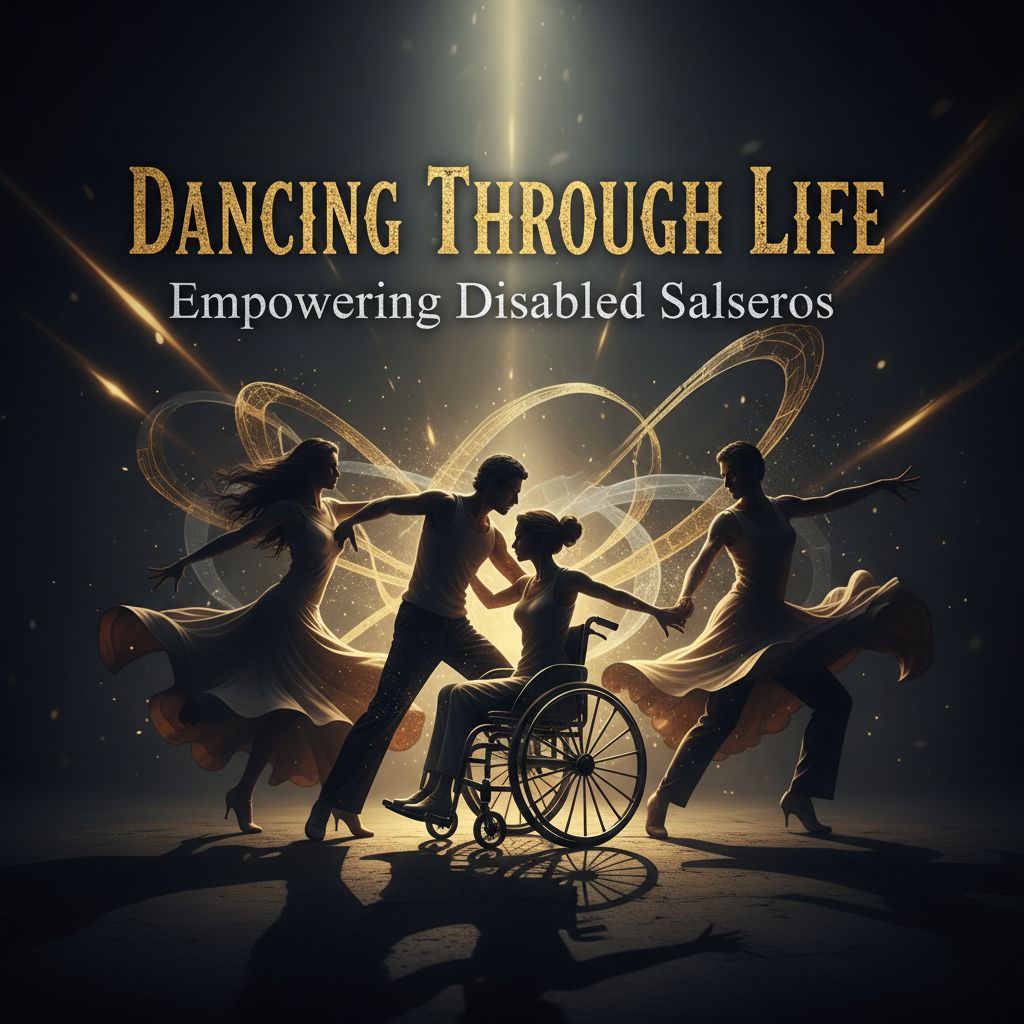
Disabled dancers and dancers with long-term conditions do dance salsa and bachata, often with adaptations: slower songs, simpler footwork, seated or wheelchair partner dancing, more breaks, and partners and teachers who adjust. The right adaptations depend on the person and the condition, so a physiotherapist or doctor who knows your situation is the best guide to what is safe.
This article is general information, not medical advice.
How can salsa be adapted?
Salsa is more flexible than its fast, spin-heavy image suggests. The core of the dance is timing, musicality and connection, and all of those survive when the footwork and patterns change.
Slower music
Not all salsa is fast. Slower salsa songs, salsa romántica, son and cha-cha-chá give more time to prepare each step and turn. Teachers can use slower tracks in class, and DJs can include a few slower songs in a set. Bachata, which is generally slower than salsa, is another option many dancers try.
Simpler footwork and patterns
- Dance the basic in place, with smaller steps, or replace some steps with taps or weight shifts.
- Stay in open position, where each partner keeps their own balance.
- Use fewer spins; arm styling, shoulder movement and musical pauses can carry a dance just as well.
- Leads can choose patterns that keep both partners stable and prepare every turn early, at least a count ahead.
Seated salsa
Seated salsa uses the music and rhythm with upper-body movement: arm styling, shoulder and torso movement, hand-to-hand partner work, and footwork from the chair where possible. It suits dancers with limited mobility, balance problems or fatigue, and some schools and community groups offer seated classes.
Wheelchair partner dancing
Partner dancing with a wheelchair is an established form, including at competition level. Wheelchair dancesport has couple categories for two wheelchair users (duo) and for a wheelchair user with a standing partner (combi), and includes Latin American dances. In a social setting, many salsa and bachata ideas translate: the standing partner can turn around the chair, the wheelchair user can lead or follow through the arms and the movement of the chair, and both can play with the music.
Trying another style
Some dancers find another partner dance suits them better for a while. Argentine tango, for example, is walking-based and danced to slower music, and some dancers find its close embrace gives them more stability. It is worth trying a class to see what feels right for your body.
Dancing with a long-term condition such as MS
Many people with neurological and long-term conditions, including multiple sclerosis (MS), describe social dancing as a way to stay active, keep practising coordination and stay connected with people. Dancing is not a treatment, and what is safe varies a lot, so talk to your neurologist, doctor or physiotherapist first. A few practical points come up often.
Heat. Many people with MS have heat sensitivity. The Multiple Sclerosis Association of America explains that exercise and hot or humid environments can cause a temporary worsening of symptoms, which typically settles once the person cools down. Crowded socials are hot, so dancers with heat sensitivity often:
- take regular breaks somewhere cooler, near a fan, air conditioning or outside
- sip a chilled non-alcoholic drink
- wear light, breathable clothing, or cooling clothing
- dance shorter sets rather than song after song
Fatigue and pacing. Plan the evening around your energy. Arrive early when the floor is quieter, decide in advance how many dances you want, and sit out songs freely. Daytime or early-evening events can suit better than late nights.
Learning in ways that suit you. Private lessons let a teacher adapt everything to you; group classes build fundamentals; social dancing is where you put it together. Some dancers also practise at home by breaking down a move from a class or video, rehearsing it slowly and mentally, then trying it at the next social.
Leading with the body, not leverage. Leads of any build, and especially tall leads, can be tempted to use height or arm strength to move a partner. A clear lead comes from your own core and posture moving first, which is also more comfortable for your partner.
Invisible disabilities. Not every disability is visible. Pain, fatigue, dizziness and many neurological symptoms cannot be seen, so respect any dancer who declines a dance, asks to slow down or stops partway through a song.
What can teachers, organisers and partners do?
| Who | Practical steps |
|---|---|
| Organisers | Choose venues with step-free access and an accessible toilet; provide seating near the floor and a cooler, quieter area; describe accessibility clearly in event listings |
| Teachers | Offer options as part of normal teaching (smaller steps, seated version, fewer spins); ask privately about needs instead of guessing; leave space for wheelchairs and mobility aids |
| DJs | Include some slower songs in each set |
| Partners | Ask what the dancer wants rather than assuming; lead clearly and early; never move someone’s wheelchair or mobility aid without asking; accept a “no” or “let’s slow down” without fuss |
Working with a physiotherapist
If an injury, illness or condition has kept you off the floor, tell your physiotherapist that dancing is your goal. A physio can build a programme that gradually reintroduces the movements dancing needs, such as weight shifts, balance, turning and stamina, and help you decide when you are ready for a class or a social.
General activity advice applies too. The NHS physical activity guidelines for adults, which the NHS says are also suitable for disabled adults, recommend regular activity including strengthening exercises, and suggest speaking to a GP first if you have medical conditions or concerns.
FAQ
Can you dance salsa in a wheelchair?
Yes. Wheelchair partner dancing exists both socially and as a competitive sport, with a wheelchair user dancing with a standing partner or with another wheelchair user. Ask local schools whether they have experience with wheelchair dancers.
What is seated salsa?
Seated salsa is salsa danced from a chair, using arm styling, upper-body movement and partner work to the music. It suits dancers with limited mobility, balance problems or fatigue.
Is it safe to dance salsa or bachata with MS?
That depends on the individual, so ask your neurologist or physiotherapist. If you have heat sensitivity, plan cooling breaks, because hot venues and exercise can temporarily worsen symptoms.